
Source: Gitcoin Governance Forum
A Quadratic Funding Powered Social Network replaces traditional social media "likes" with micro-tips that are amplified through quadratic funding matching pools. Instead of zero-value engagement signals, users send small payments to content creators, and those payments are matched from a pool — making each tip worth far more than its face value and fundamentally changing the incentive structure of social platforms.
The Problem: Bootstrapping Prosocial Networks
Traditional social networks optimize for attention and engagement, often incentivizing outrage and polarization. Creators generate enormous value but capture only a fraction of it. The "like" button is an infinite-supply token with no real utility — people like something when it creates a visceral reaction, but people tip someone when they feel they've truly been provided value.
How It Works
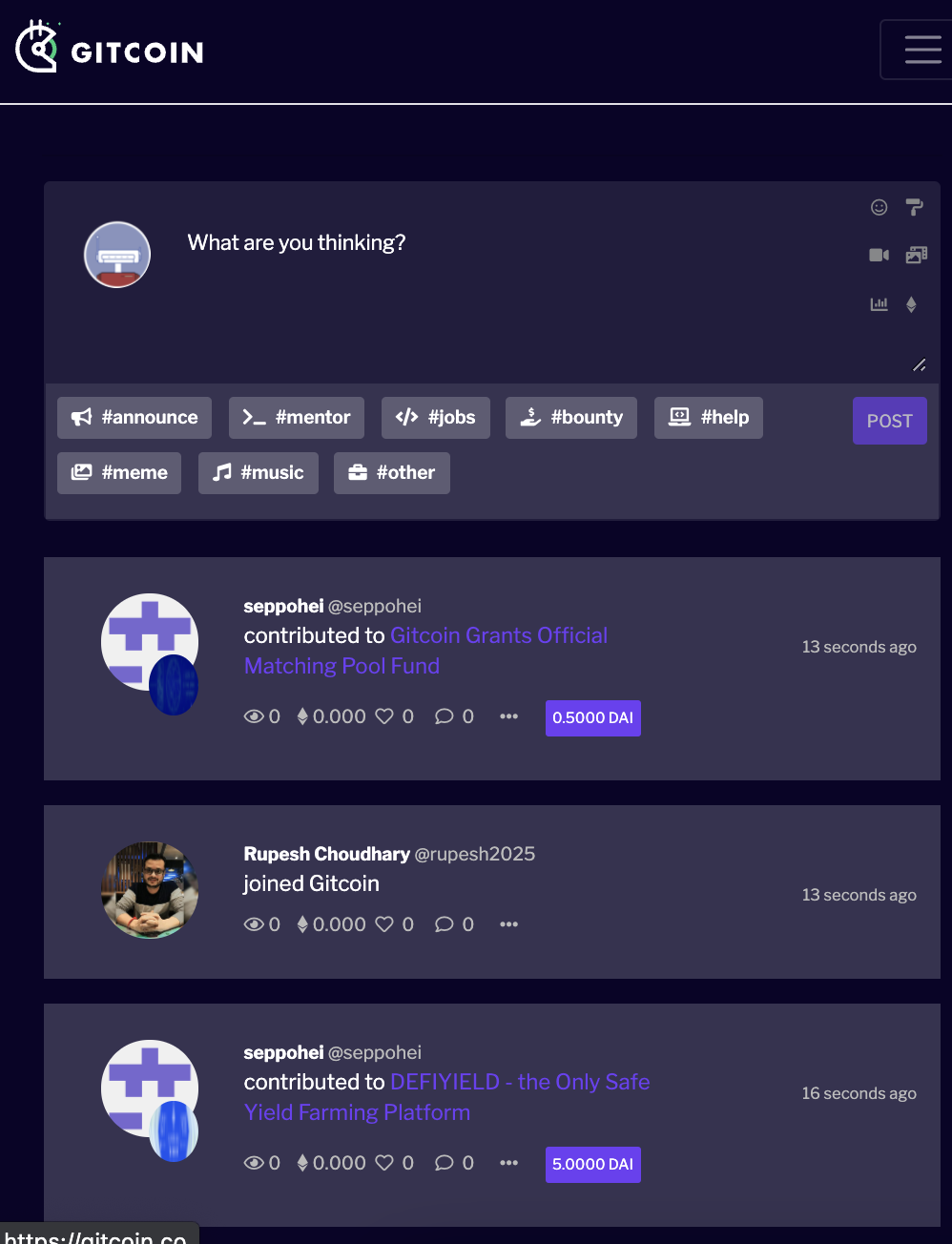
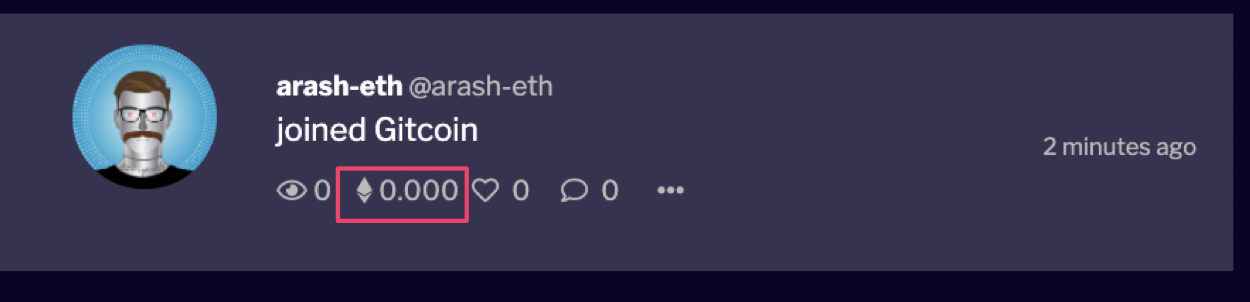
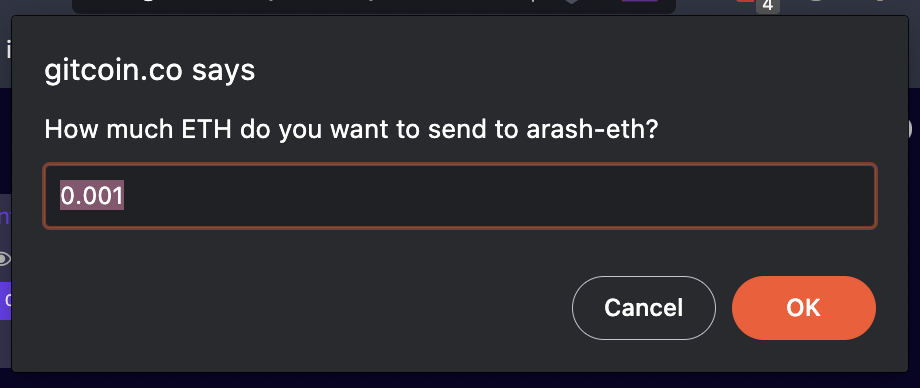
- Micro-tips replace likes — Users send small payments (e.g., 0.001 ETH / ~$0.30) to valuable posts instead of clicking a like button
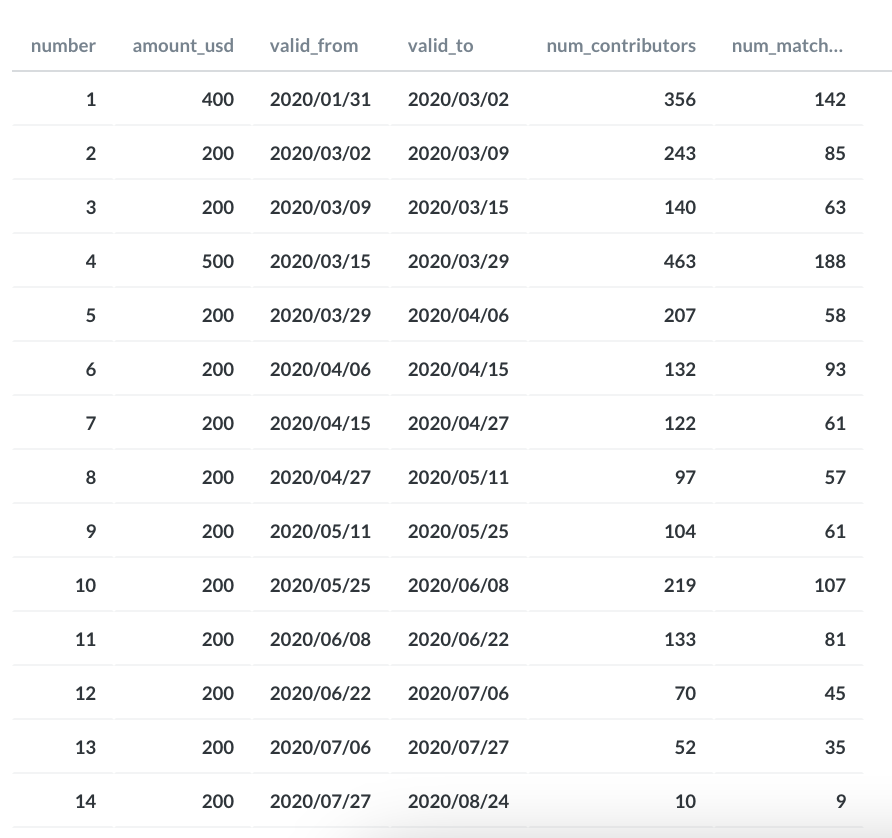
- Quadratic matching amplifies tips — A matching pool (e.g., $200/week) distributes funds quadratically, meaning many small tips create larger matches than a few large ones
- Leaderboards drive participation — Top contributors gain visibility, creating a class of community members who earn by being helpful and providing value
- Sybil resistance testing — Weekly rounds allow rapid detection of attack patterns, informing broader anti-fraud strategies
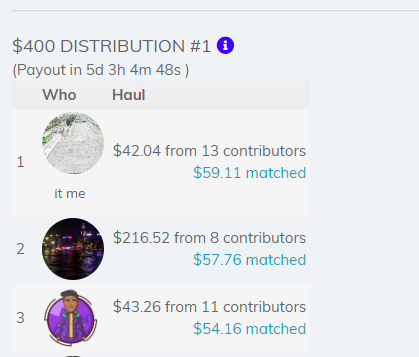
Gitcoin Townsquare Experiment
Gitcoin tested this mechanism with its "Townsquare" activity feed in early 2020, running 14 successive weekly QF rounds:
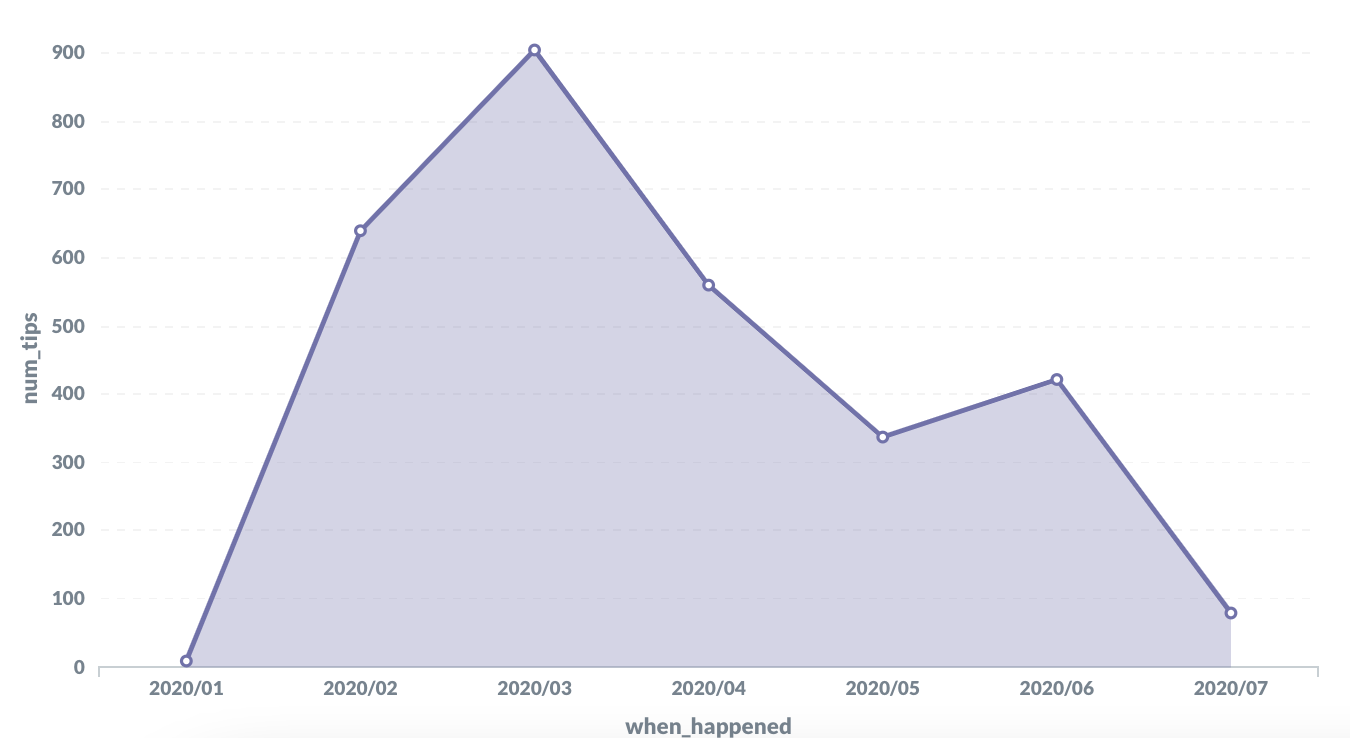
- 2,348 contributions and 1,085 matching payouts
- Median tip: 0.001 ETH ($0.30), median match: 0.005 ETH ($1.50)
- Daily active users increased substantially
- Community members shifted from passively ignoring help requests to actively problem-solving — directing support requests to relevant resources, answering questions about the network

The leaderboard created what the author calls "a class of community member that earned by being helpful + providing value." Users competed to climb rankings, fundamentally changing platform culture toward cooperation.
The experiment also served as a sybil resistance honeypot — weekly rounds allowed rapid detection of attack patterns, informing broader anti-fraud strategies for Gitcoin Grants.
Example Posts That Received Tips
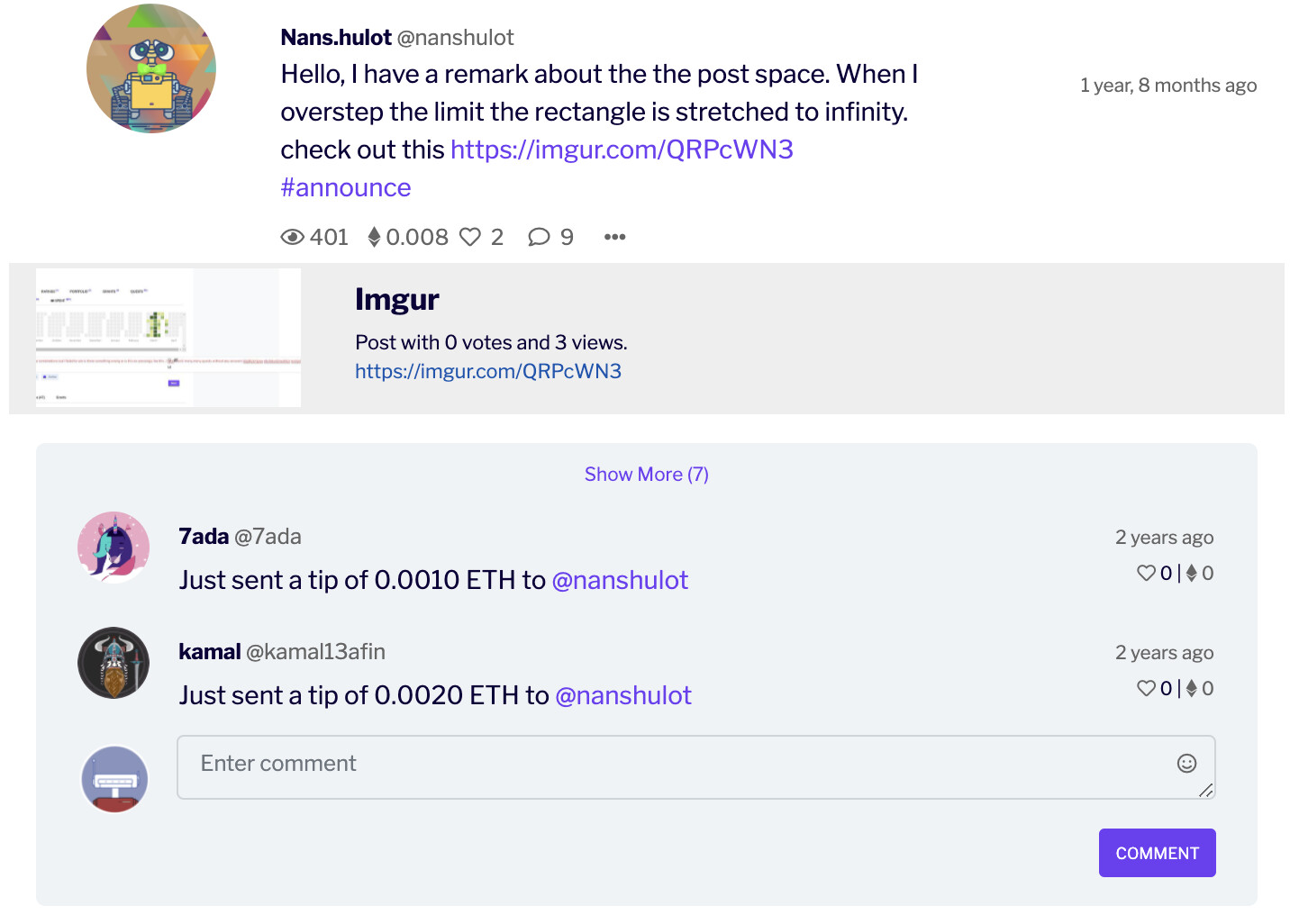
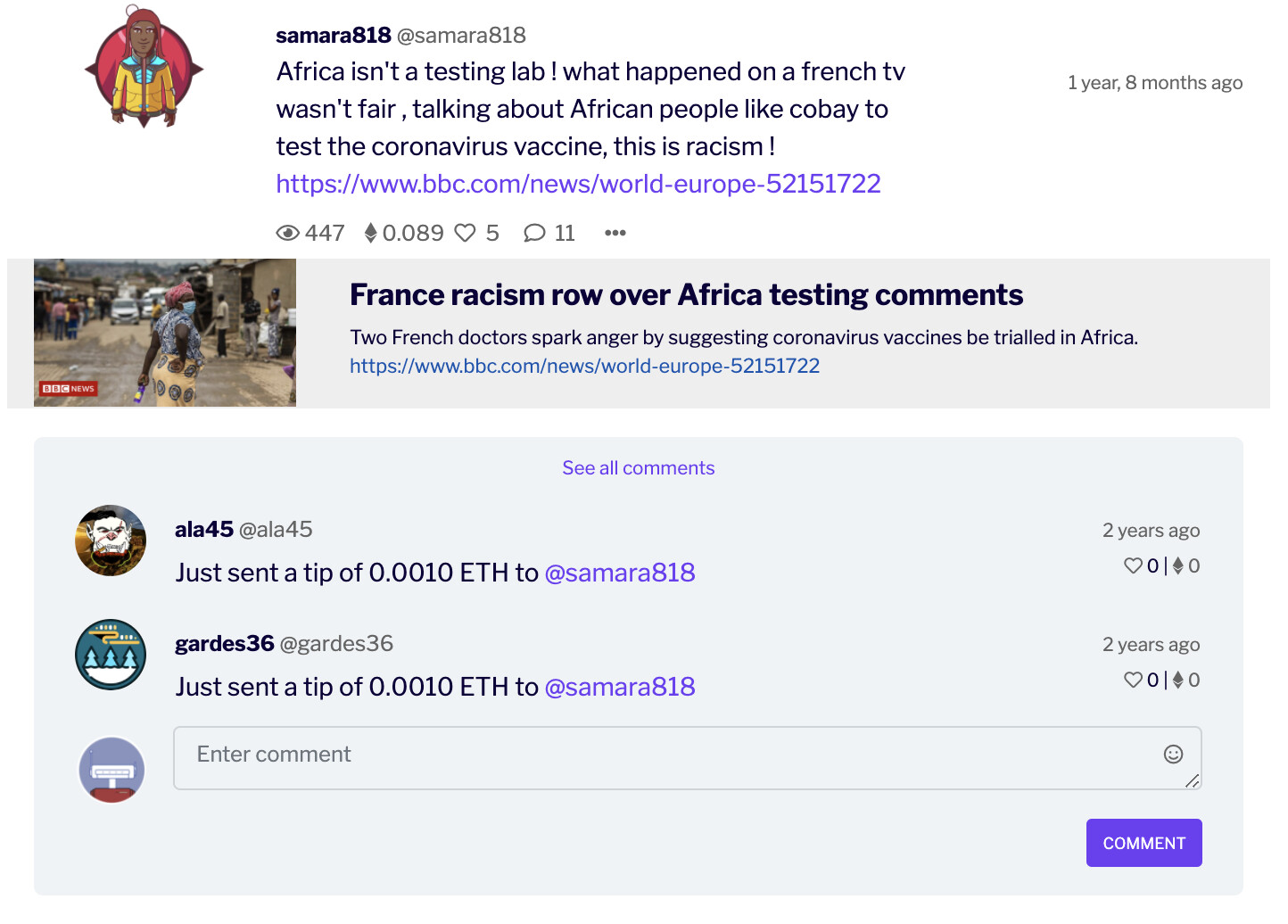
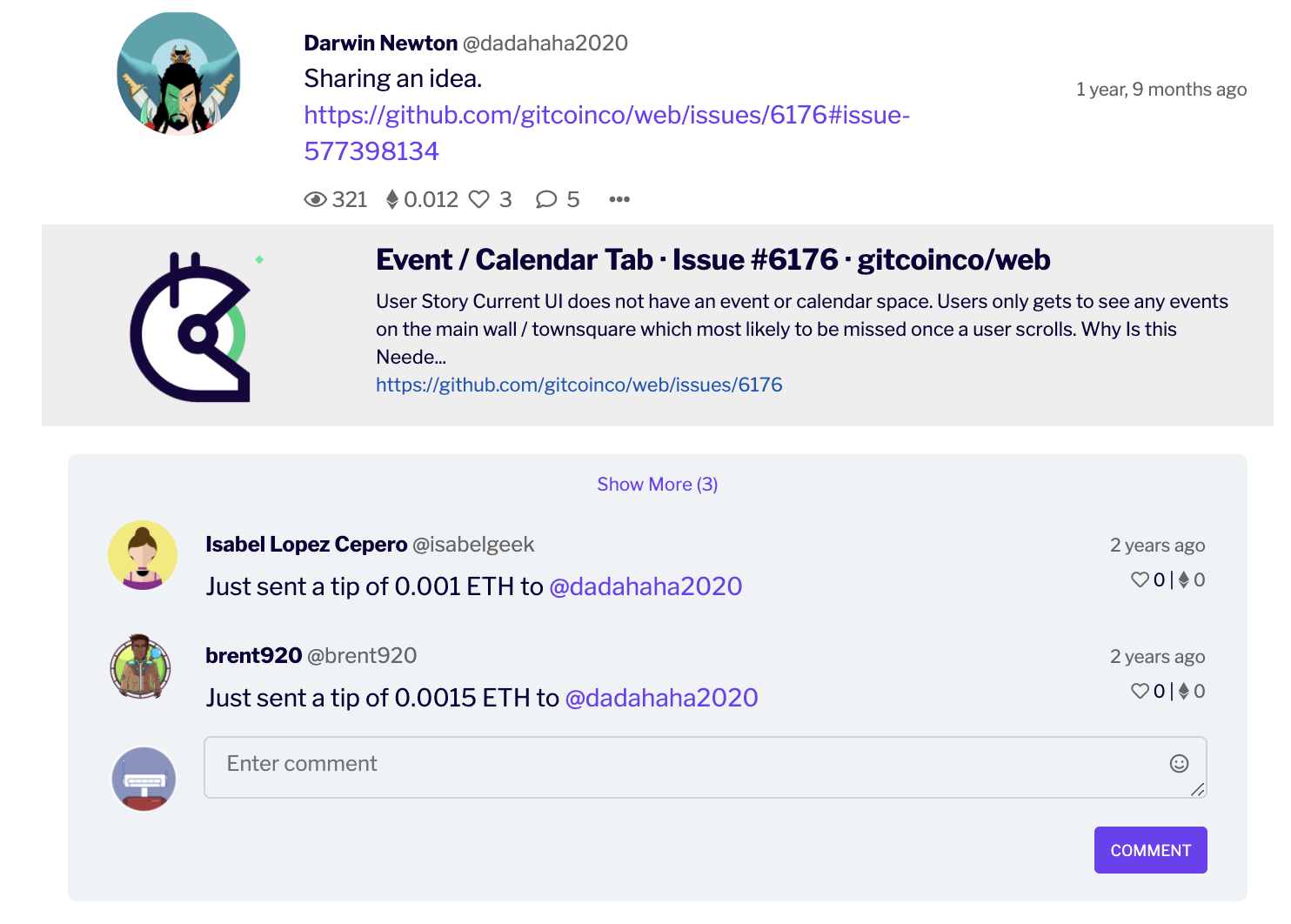
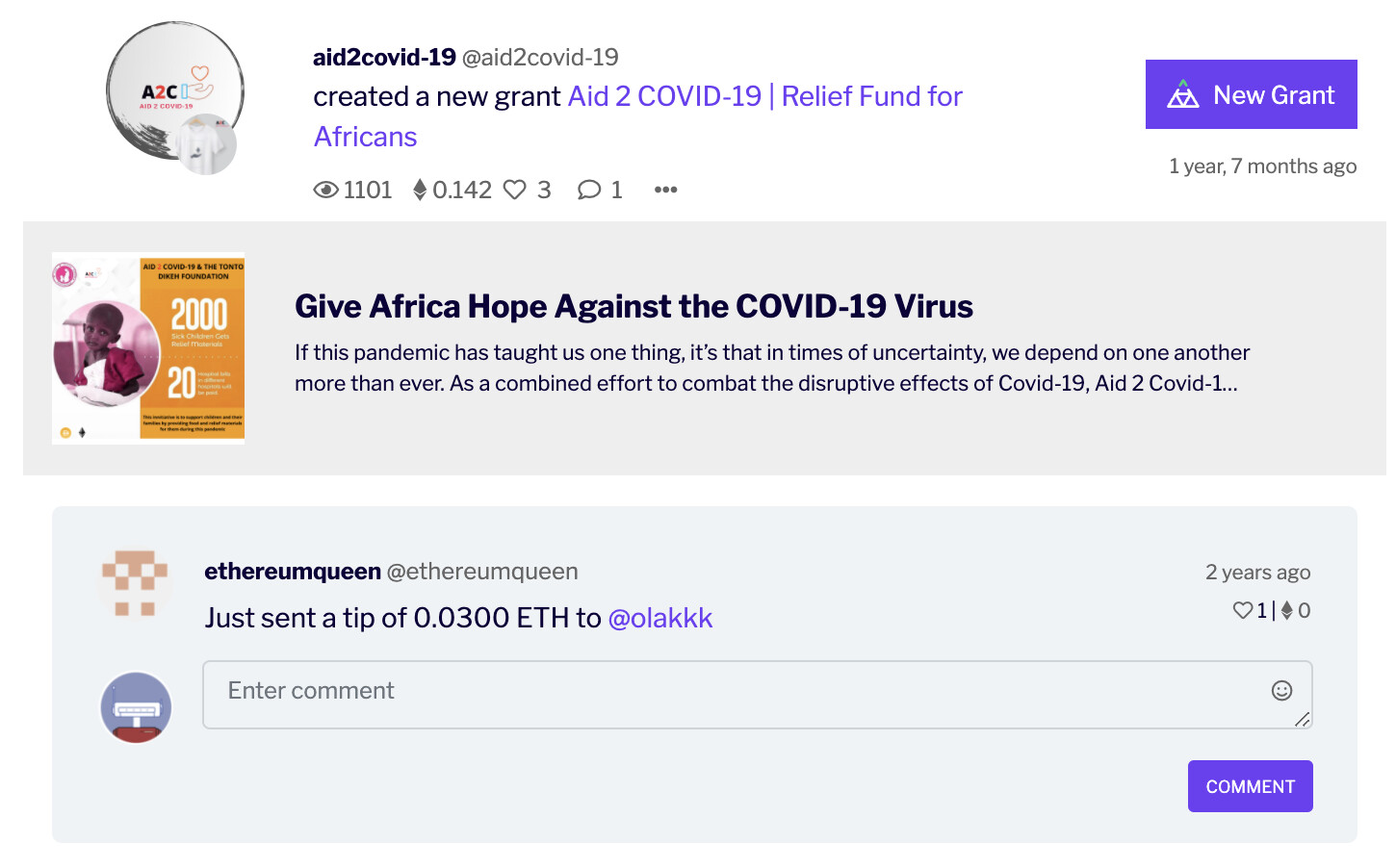
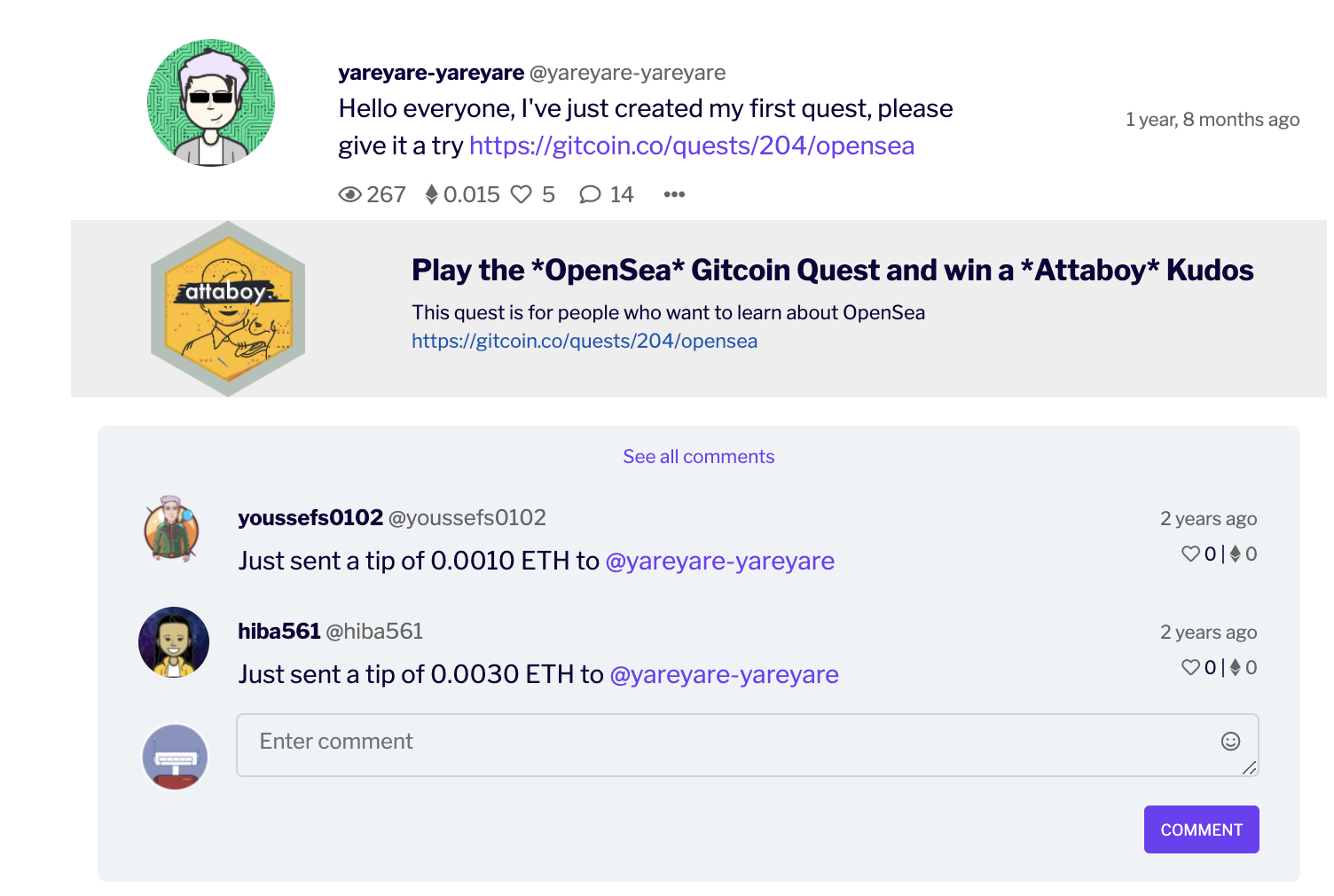
Here are a few examples of posts from 2020 that received substantial tips, illustrating the kinds of helpful, prosocial content the mechanism incentivized:
Why It Ended
Rising Ethereum gas fees during "DeFi Summer" (mid-2020) made transactions uneconomical. Organizational priorities simultaneously shifted toward Layer 2 integration, bulk checkout features, GitcoinDAO formation, and the Consensys spinout. The experiment was shelved, though it contained "the kernel of a great idea."
The Vision
What if we replaced likes with micro-tip subsidies across social media? Would we close the asymmetry between value created and value captured for creators? The mechanism addresses well-documented problems with web2 networks: polarization, extractive creator economics, and non-forkability.
Subsequent Implementations
- QuadraticLenster.xyz — integrated QF matching into Lens Protocol's social feed (2023)
- Matter.News and GoodMicroGrants — implemented similar micro-tipping with matching pools
- Layer 2 networks now make gas fees feasible for micropayments, reviving the model's viability
Key Insight
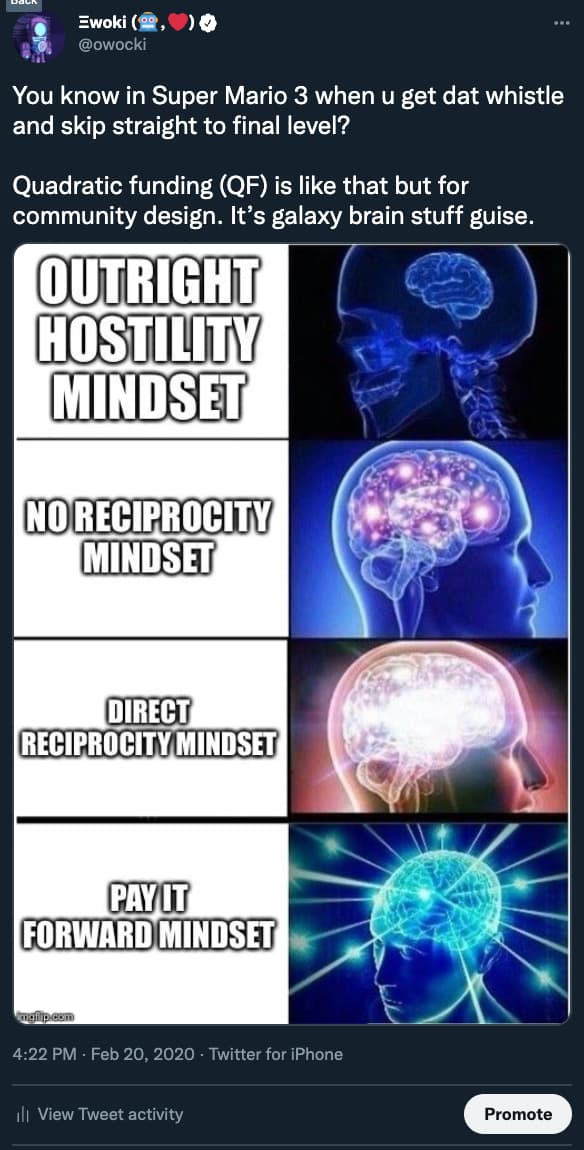
Quadratic funding transforms social network incentives from zero-sum attention competition to positive-sum value creation. By matching community-validated tips, platforms can systematically upregulate helpful, prosocial content while creating sustainable income for creators.