TLDR: Humans organized as egalitarian tribes, then feudal hierarchies, then corporations. DAOs are the next chapter — reviving collective decision-making and shared ownership through blockchain, but without the inefficiencies that doomed earlier attempts at democratic coordination.
Originally published: X Article — January 21, 2025
The way humans organize themselves has always been a reflection of their priorities and resources. Long before cities or nations existed, hunter-gatherer tribes thrived on egalitarianism. Decisions were made collectively, and resources were shared for survival. Leaders emerged based on skill or wisdom, not coercion. This cooperative spirit laid the groundwork for humanity's earliest social structures, where moral guidance was as vital as physical sustenance.
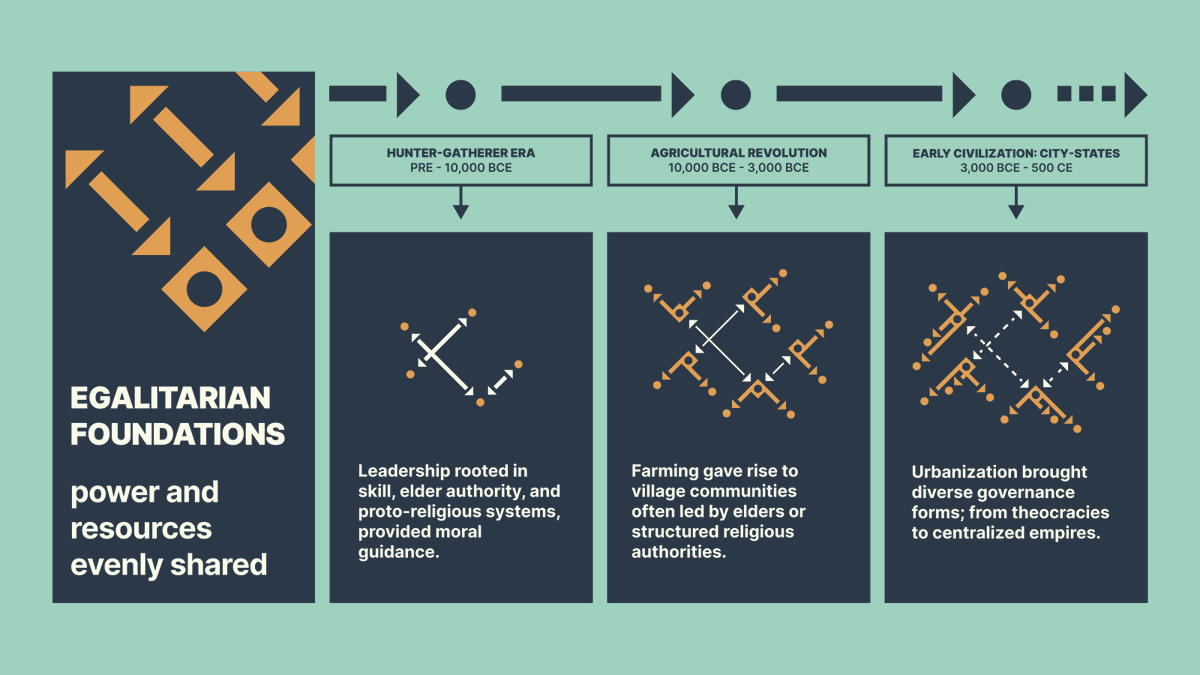
The Agricultural Revolution was a turning point, giving rise to village communities and early forms of governance. Elders or religious authorities managed farming and irrigation systems, requiring collaboration and leadership to handle increasingly complex needs. As urbanization flourished, city-states emerged, each experimenting with governance models from centralized empires to theocracies. Codified laws and bureaucracies became the tools of stability, ensuring societies could grow while maintaining order.
Fast forward to the feudal era, and a more hierarchical structure takes center stage. Land-based economies fostered the development of manorial systems, where self-sufficiency was key, and merchant guilds regulated trade. With the Renaissance and the early modern era came the rise of empires, driven by colonization, trade, and resource exploitation. Banks and trading companies transformed global commerce, concentrating power in the hands of a few, yet sowing the seeds of interconnected markets.
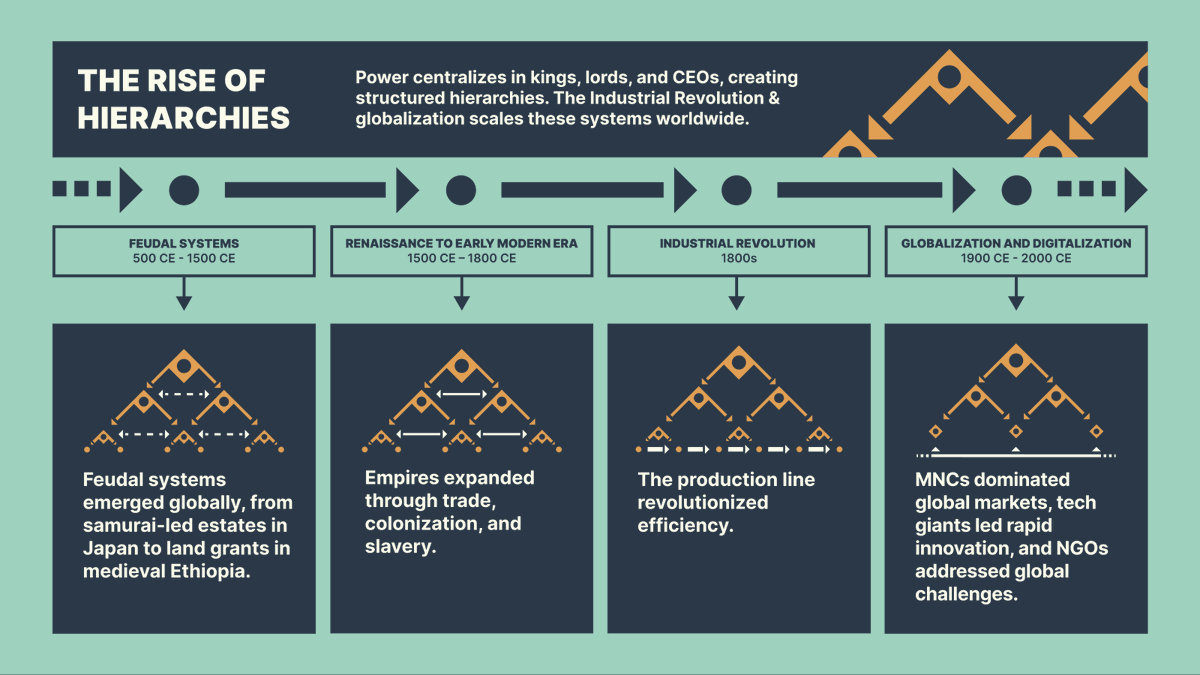
The Industrial Revolution further solidified centralized power structures. Innovations like the production line and railroads enabled unprecedented efficiency, creating the foundation for the multinational corporations of the 20th century. The globalization and digitalization era saw these corporations dominate, while NGOs and tech giants addressed global challenges. Despite the interconnectedness, power largely remained centralized, echoing the hierarchies of the past.
Since the launch of Ethereum in 2015, a new chapter begins with Decentralized Autonomous Organizations (DAOs). Powered by blockchain technology, DAOs represent a digital-egalitarian era where governance rights are distributed among members, reviving the collective decision-making of ancient societies. By blending technological innovation with the values of cooperation and equality, DAOs offer a glimpse of a future that prioritizes shared opportunity and transparent leadership. Could they become the cornerstone of a truly decentralized world? The answer lies in how we embrace this new wave of innovation.
Throughout history, young, enterprising individuals have always ventured to the frontier for adventure, freedom, and the promise of riches. From pioneers exploring new lands to innovators building industries, the drive to carve out a space in the unknown has been timeless. Today, our frontier is digital, and understanding HOW to DAO means you can squad up and explore it in multiplayer mode. DAOs are often innovative structures that can offer a new realm of possibility for those ready to explore the uncharted territories of governance, technology, and community.
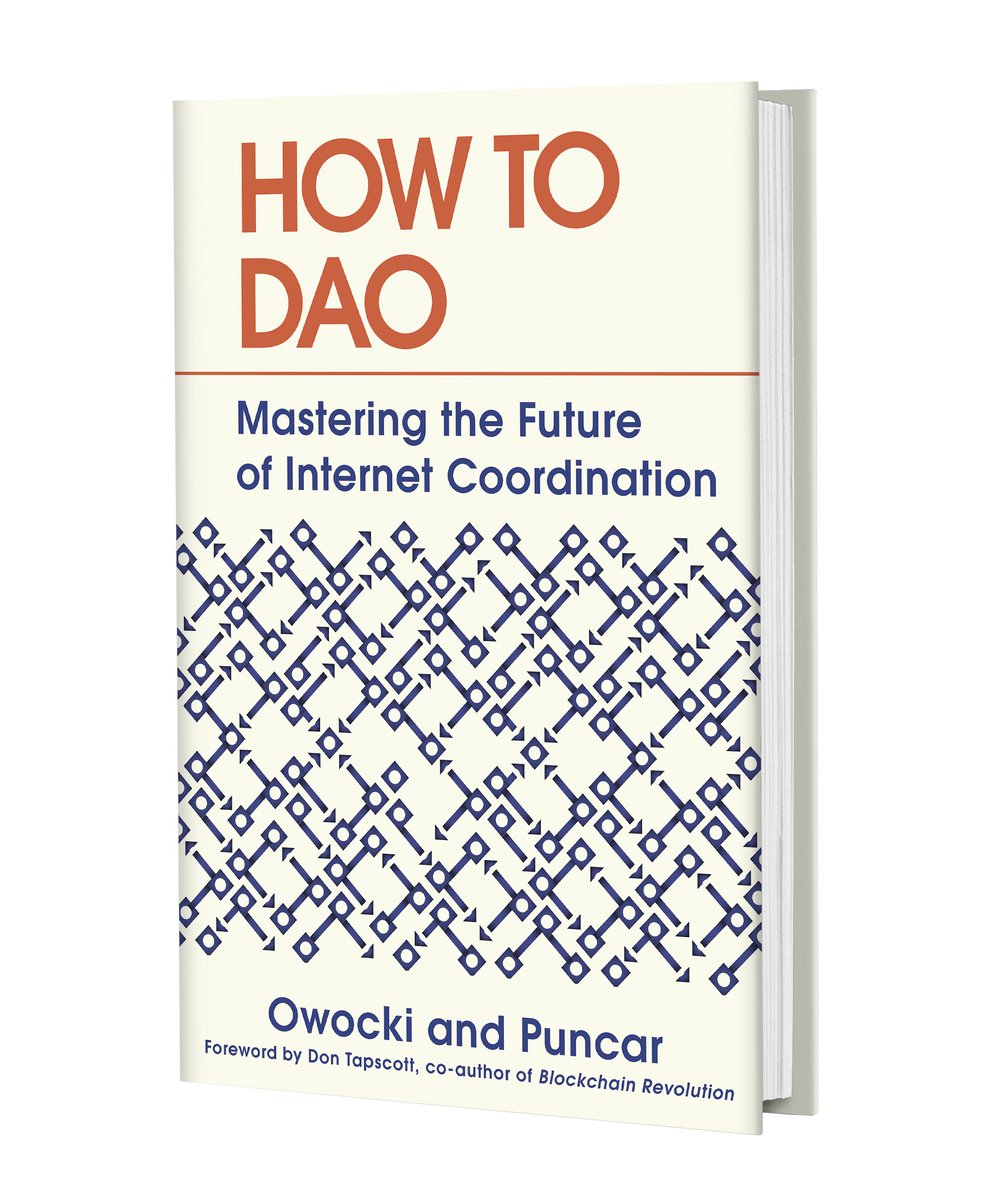
To guide you on this exciting journey, we've written How To DAO, a comprehensive guide to navigating this emerging frontier. Get your copy at howtodao.xyz & start your adventure at the frontier in the DAO era.