Source: Gitcoin Governance Forum
TLDR
- Guilds as Collective Power: Historically used for collective bargaining and resource pooling, guilds now extend to digital communities like Protocol Guild, which supports Ethereum developers through aggregated funding.
- Collective Bargaining Advantage: Protocol Guild leverages group negotiating strength, enabling Ethereum core contributors to secure protocol and DAO funding for public goods.
- Guild Guild Purpose: Functions as a locus of coordination for guilding (creating, stewarding, enabling, or studying guilds), serving as a mechanism to establish and promote additional guilds.
What is a Guild?
A guild represents a community of individuals or groups that collaborate for a common purpose, pooling resources and efforts to achieve shared goals. Historically significant in trade and craft industries since the 11th century, guilds organized workers for collective bargaining on working conditions and compensation.
In contemporary web3 contexts, the Protocol Guild exemplifies this evolved model. It creates mechanisms for rewarding Ethereum core contributors collectively, with treasuries accumulating millions of dollars distributed among developers.
Collective Bargaining Power
Guilds empower members through organizational strength while stabilizing funding volatility. They function similarly to labor unions by amplifying individual contributors' negotiating capacity against institutional entities.
Key benefits include:
- Efficient Labor Matching: Guilds create legible group identities associated with specialized, high-quality work
- Attention Savings: Both guild members and funding organizations benefit from reduced coordination overhead
- Positive-Sum Innovation: The model benefits all parties through improved efficiency
The Need for More Guilds
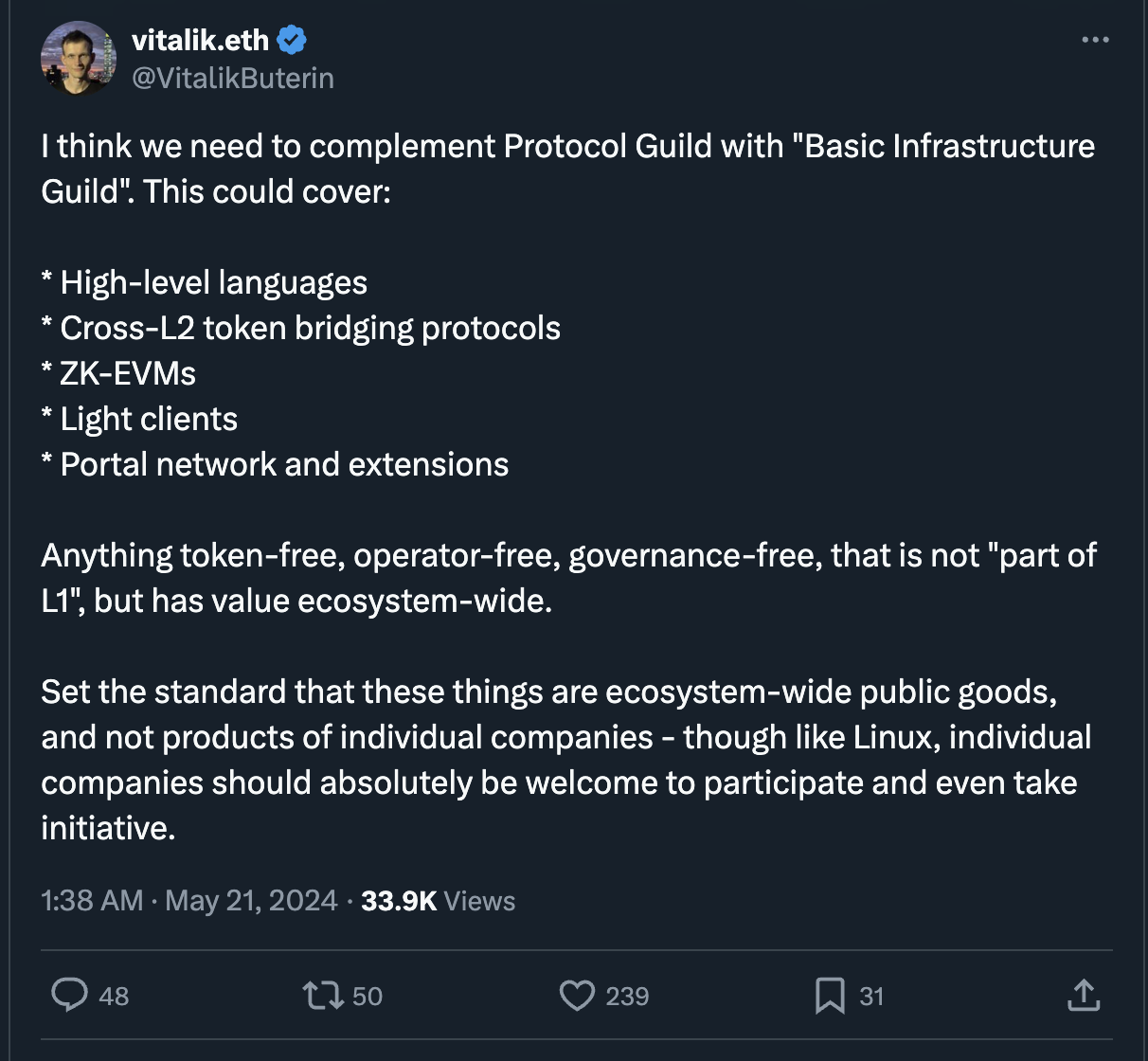
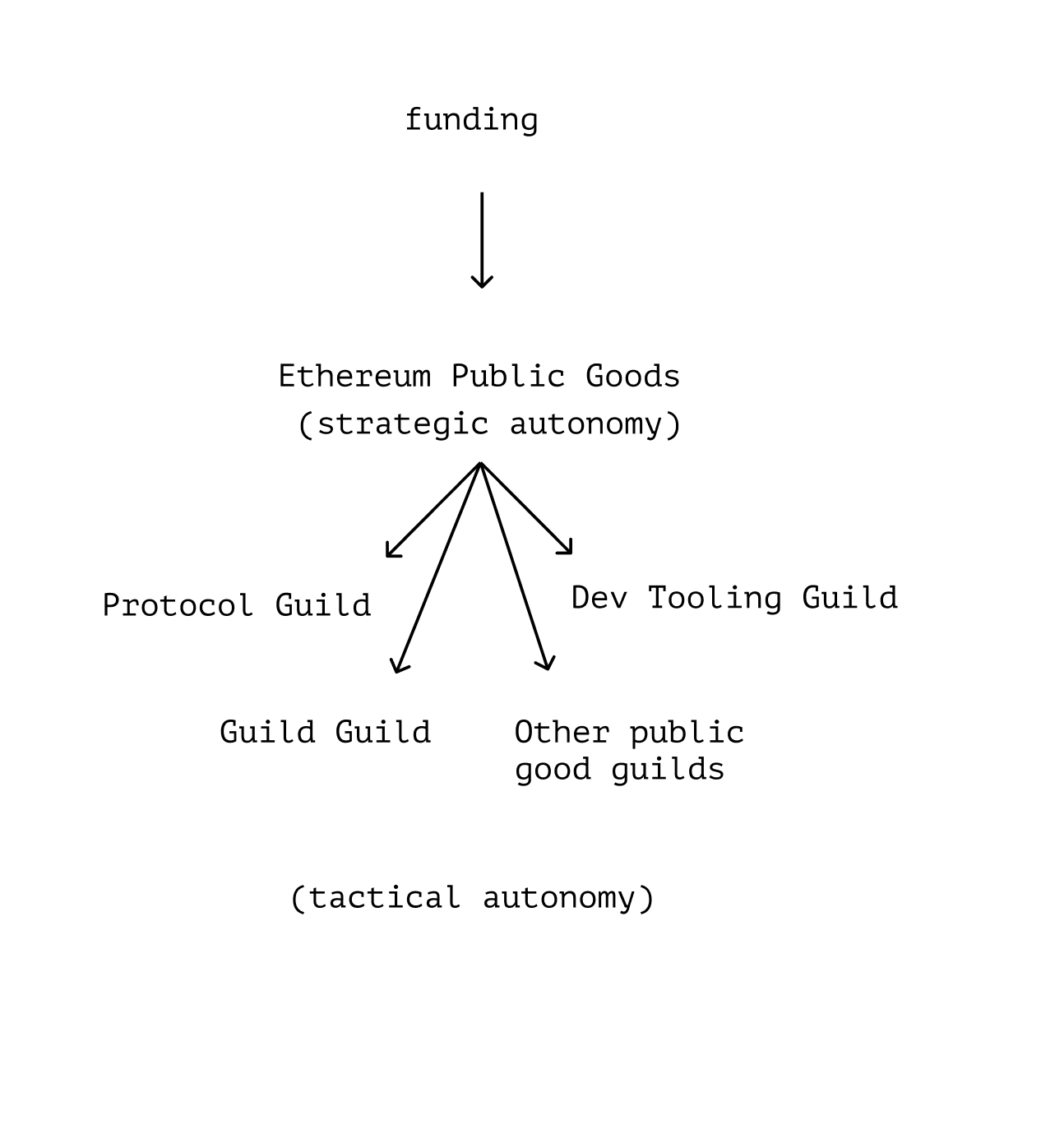
The Protocol Guild's success sparked broader discussions about expanding the guild model ecosystem-wide. Potential specialized guilds include:
- Protocol Guild: Original core contributor funding model
- Dev Tooling Guild: Developer tools creation and maintenance
- DAO Guild: Governance standards, delegate organization, research coordination
- Security Guild: Ethereum security specialization
- IRL Guilds: Real-world events and experiences
- Guild Guild: Meta-guild for coordinating and supporting other guilds
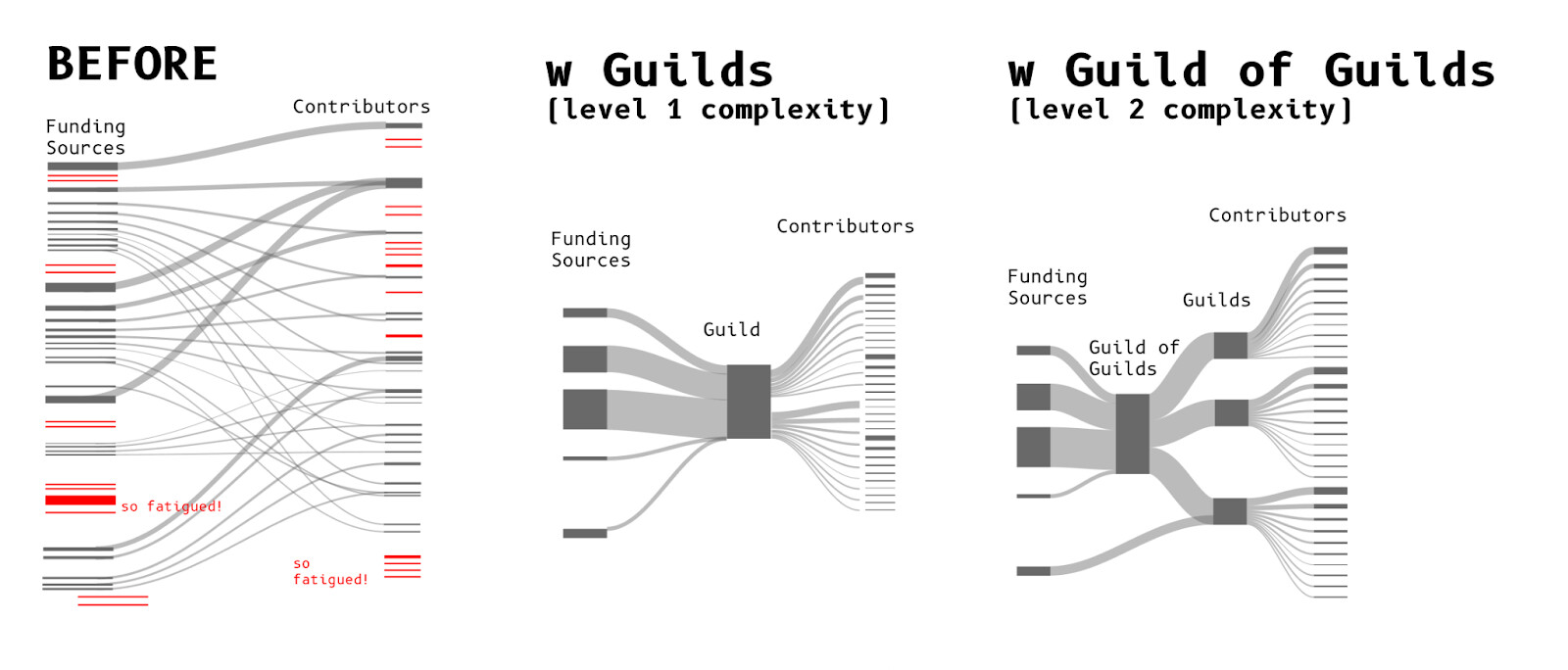
As guilds proliferate, "funder fatigue" becomes a concern, addressable through curated guild registries.
Guild Guild: A Guild Generator
Guild Guild addresses ecosystem coordination needs by replicating and extending Protocol Guild's success. Operational approaches include:
- Propagating guild-formation capabilities
- Simplifying organizational processes
- Sharing best practices across creation and fundraising
- Aggregating guilds into higher-order structures
- Supporting both top-down curation and bottom-up self-organization
Guild Ecosystem Attributes
The ecosystem should embody:
- Anti-Capture: Multiple guilds prevent monopolistic control
- Pluralism: "Coopetition" between cooperative and competitive dynamics
- Localized Governance: Autonomous decision-making within each guild
Minimal governance surfaces address:
- Domain Definition: Clear membership qualification criteria
- Curation Logic: Contribution identification and weighting
- Splitter Logic: Fund distribution mechanisms (streaming or manual)
Reducing Attention Costs
Guild structures decrease coordination burden for both members and funders. Guild Guild serves dual functions: distributing guild-formation tools and facilitating cross-guild coordination through registries.
This model enables funders to access specialized expertise through guild intermediaries, individual guilds to focus tactical efforts within specializations, recursive outcome evaluation, and reputation-building across organizations.

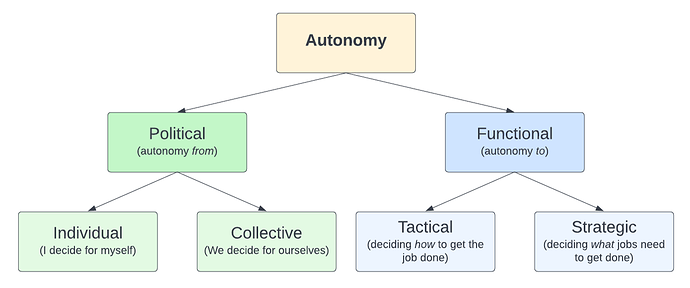
Guilds establish stable loci of coordination — preserving adequate decentralization while reducing the attention costs of that coordination.
Next Steps
Creating a Guild Generator: Development priorities include optimizing smart contracts for diverse guild applications, modularizing Protocol Guild components for replicability, and encoding off-chain mechanisms into transferable recipes.
Aggregating Guilds: Anticipated guild proliferation requires accessible launch mechanisms. Qualifying communities should share Ethereum public goods commitment and purposeful coordination intention. Low barriers encourage experimentation, with the most legitimate experiments rising to the top through evolutionary selection.
Conclusion
Guild Guild catalyzes Ethereum public goods ecosystem coordination. By reducing formation barriers, it enables communities to self-organize, amplify collective bargaining, and foster decentralized innovation resistant to centralization. LFG (Let's F***ing Guild).