TLDR: Public goods funding needs civilizational-scale infrastructure — blockchain-based ImpactDAOs using quadratic funding and other mechanisms to create decentralized, global coordination. Not a single platform, but a pluralistic ecosystem of interconnected funding systems.
Source: Gitcoin Governance Forum
The Problem: Existential Risks Beyond Nation-States
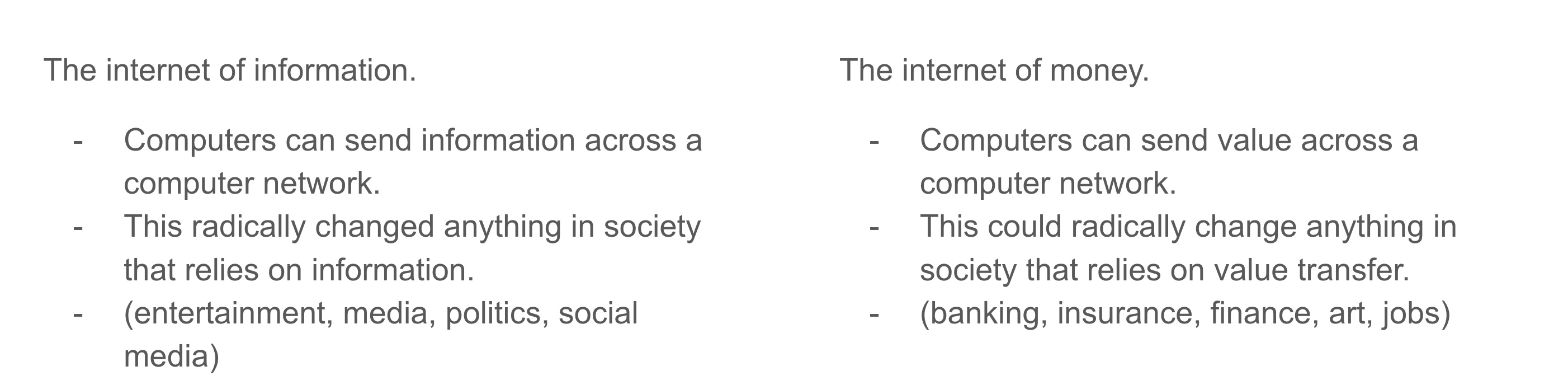
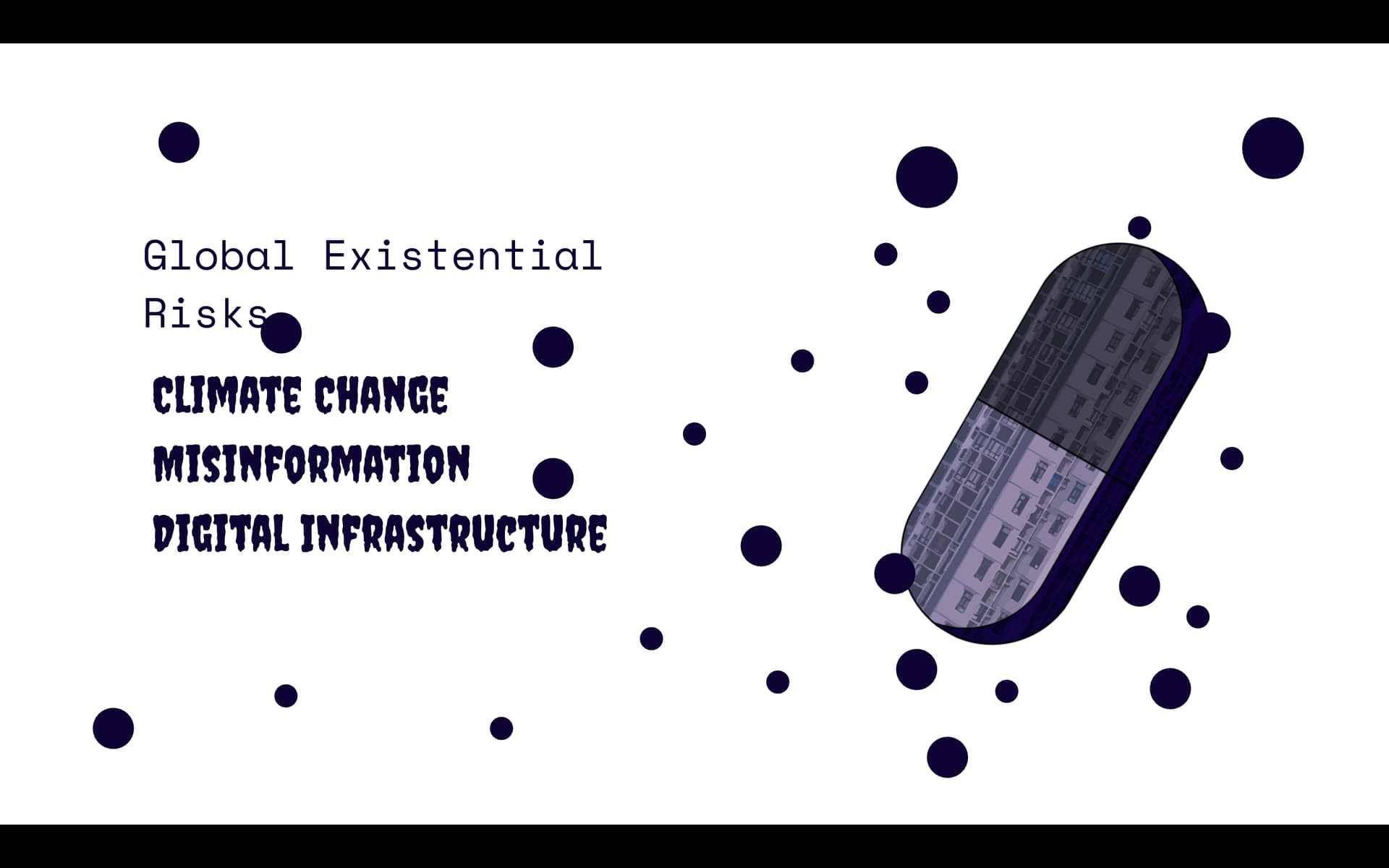
Several global challenges that existing governmental structures inadequately address:
- Climate change
- Misinformation and disinformation
- Underfunded digital infrastructure
- Nuclear proliferation
- Environmental degradation
- Resource shortages
These issues transcend national boundaries and demand alternative coordination mechanisms.
Core Concept: ImpactDAOs
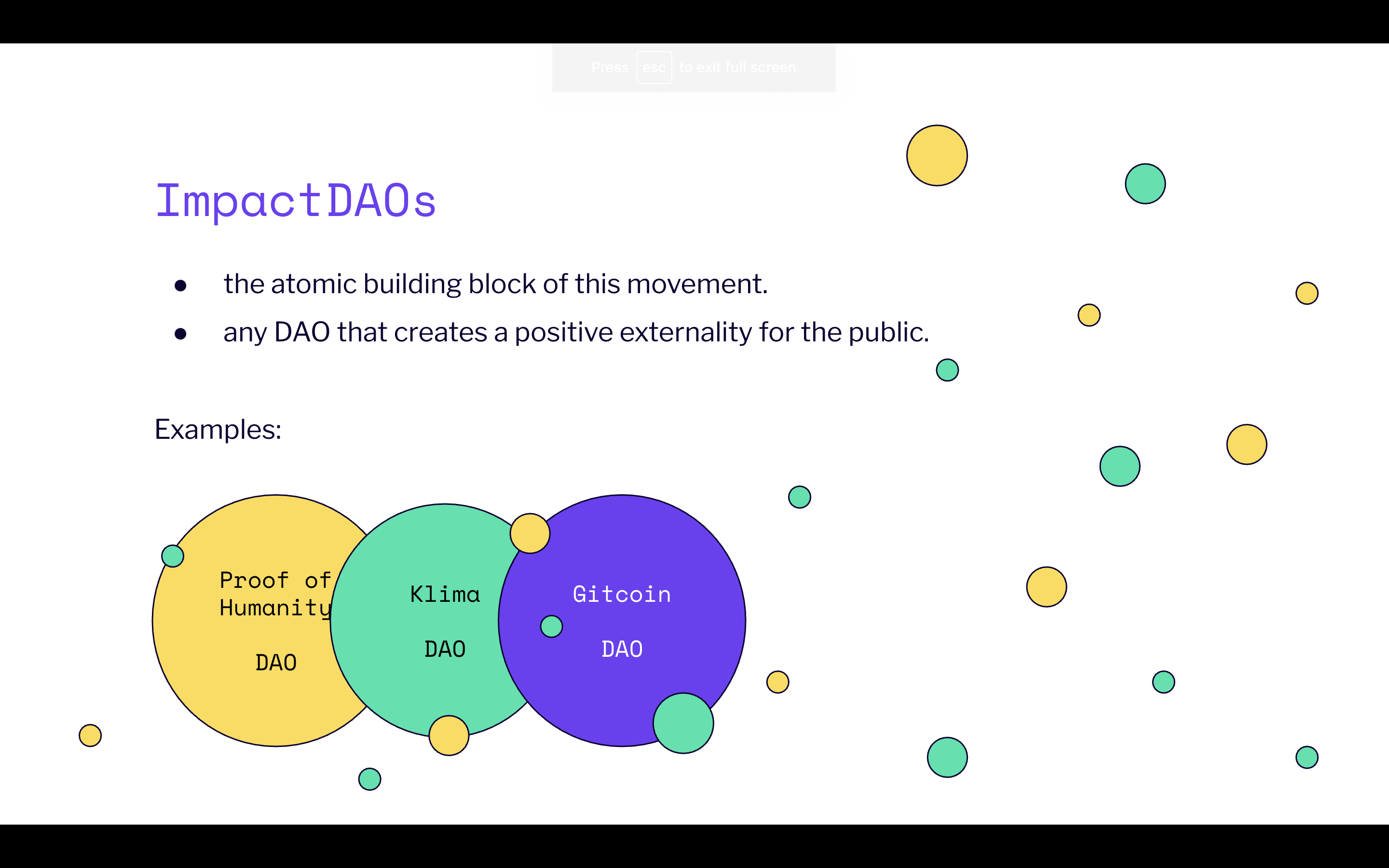
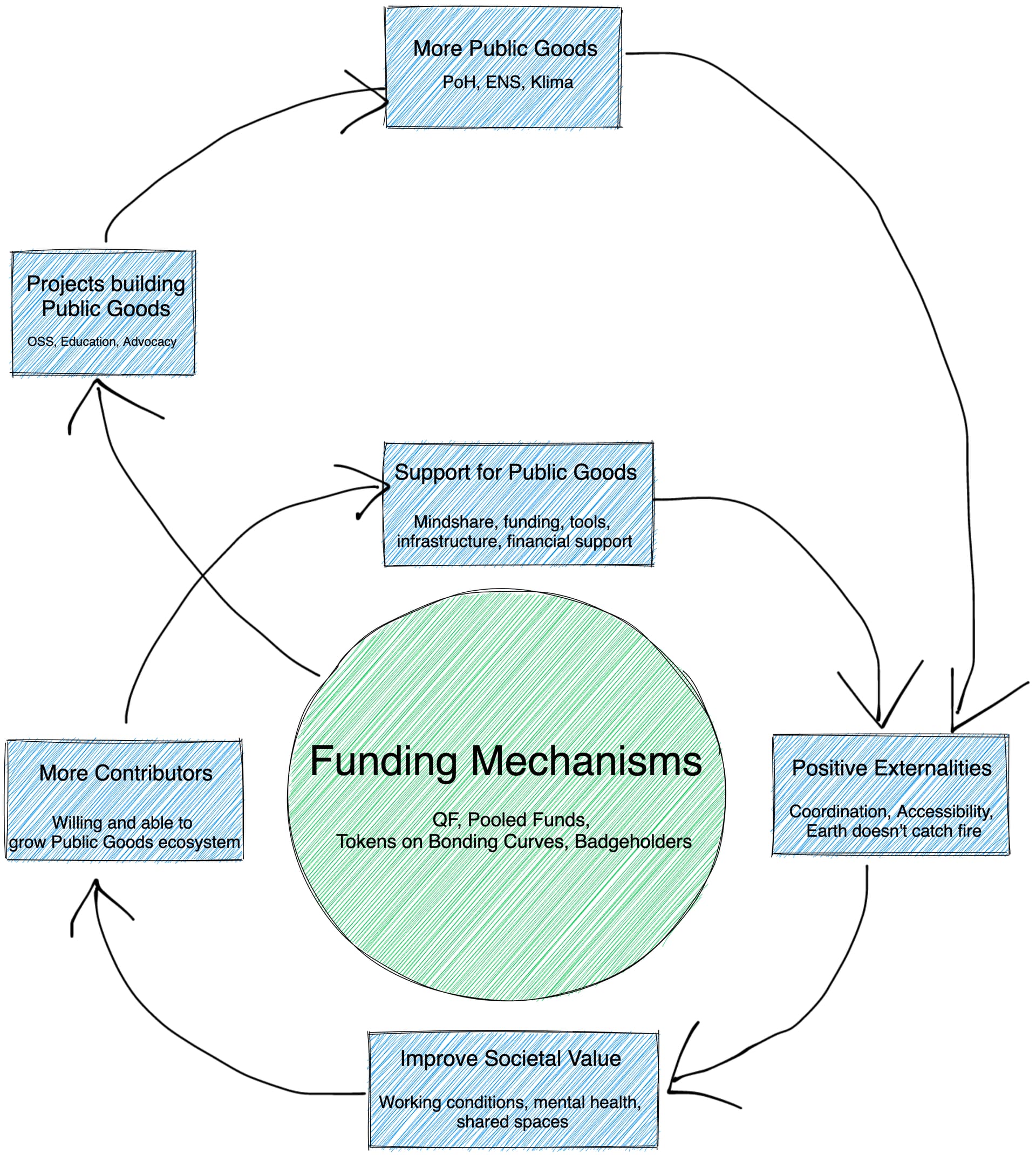
An ImpactDAO is any DAO that provides a positive externality, especially positive externalities for the public not captured by any group. Examples include:
- Proof Of Humanity — creates sybil resistance infrastructure
- KlimaDAO — funds carbon capture initiatives
- GitcoinDAO — allocates resources to other public goods
Stacking and Force Multiplication
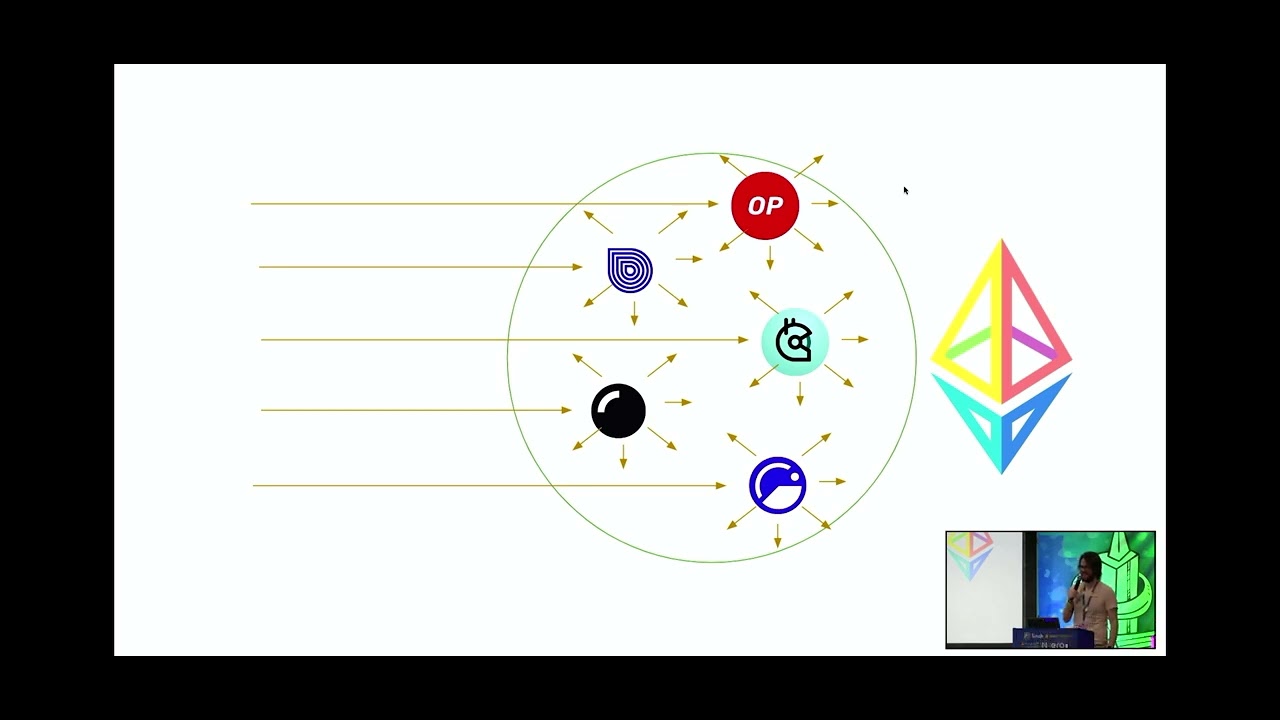
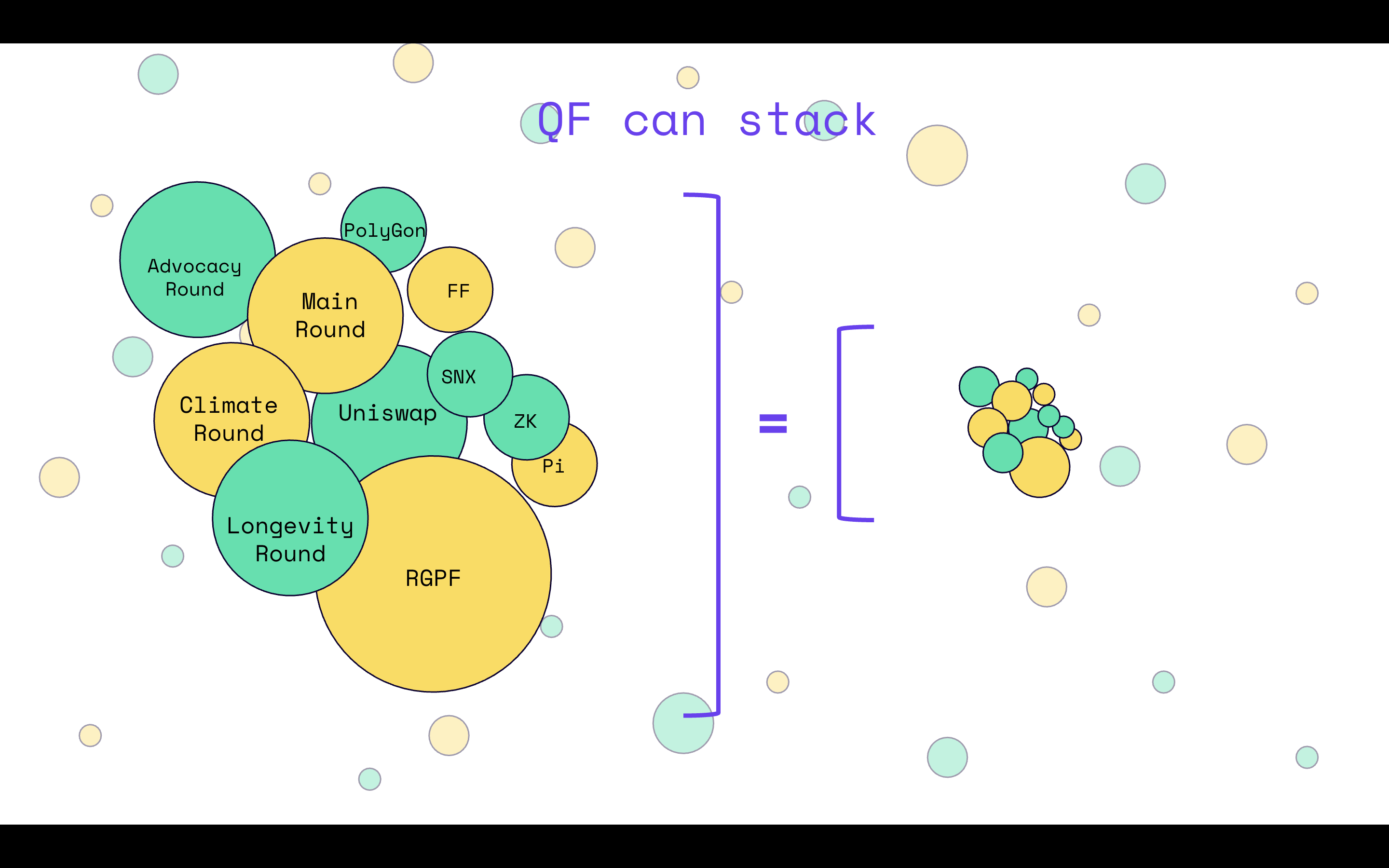
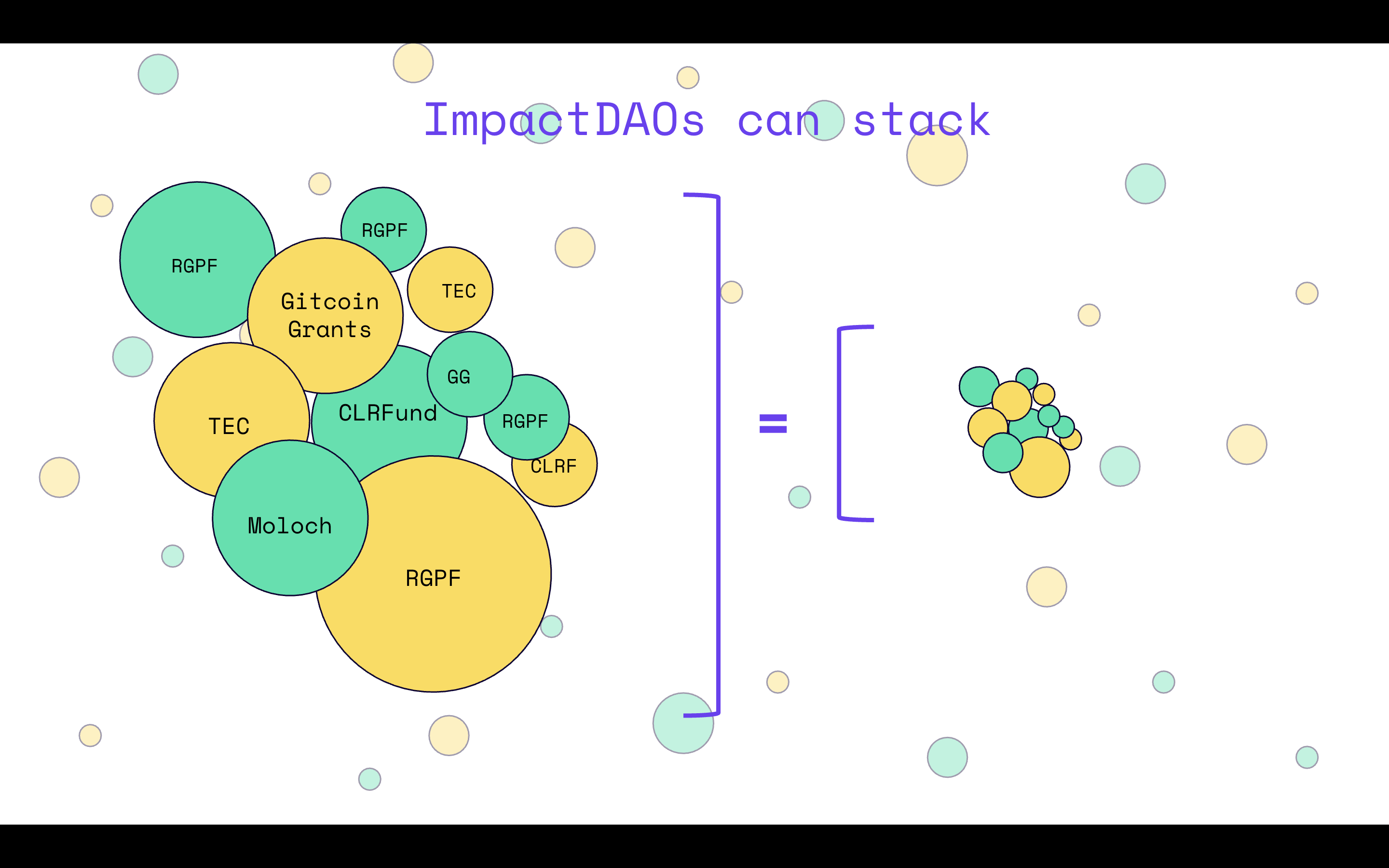
A key insight involves how ImpactDAOs can layer upon each other, creating positive externalities across the stack. Using quadratic funding, multiple matching pools can amplify impact dramatically. One QF round is like a fan, many is like a jet engine.
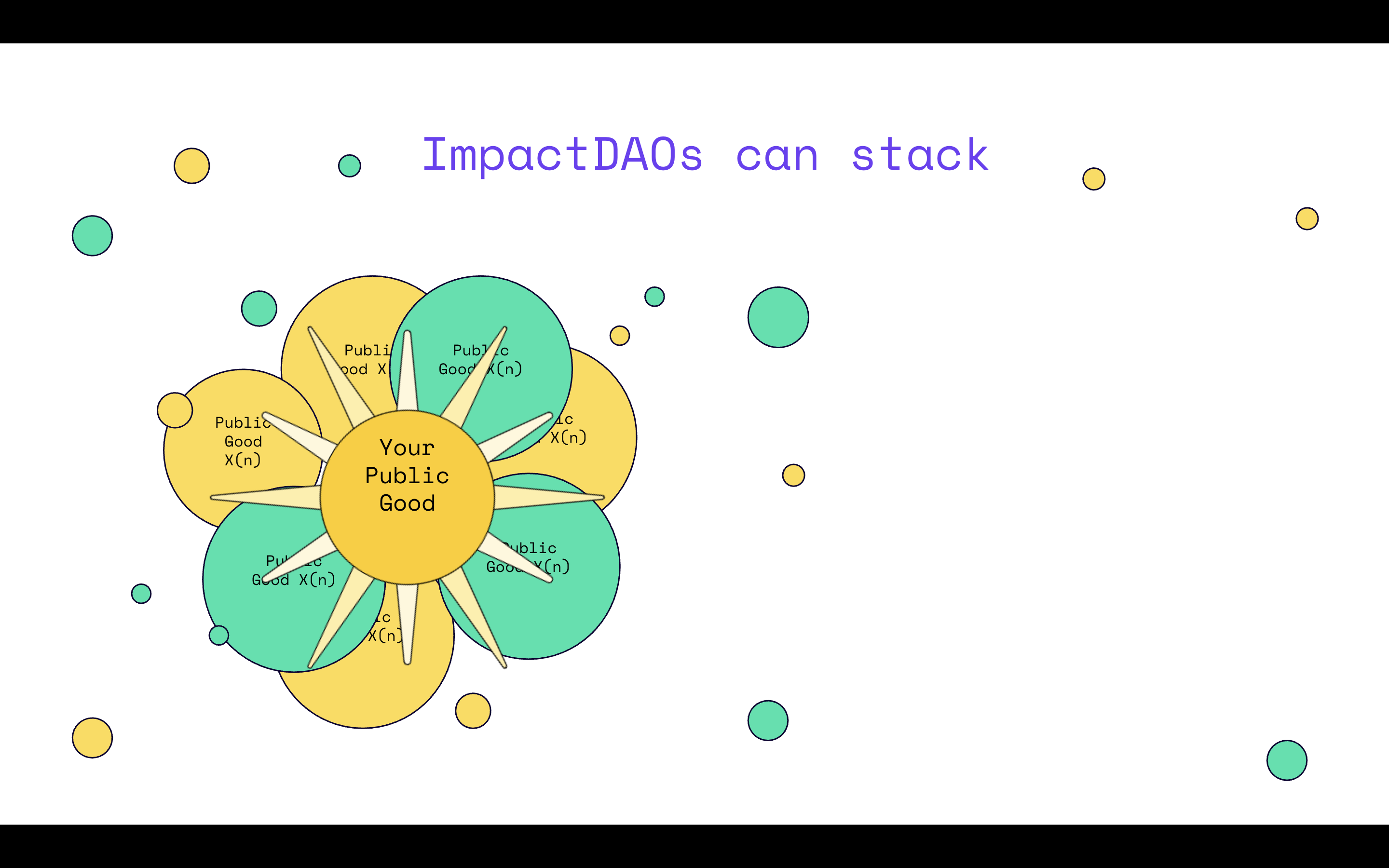
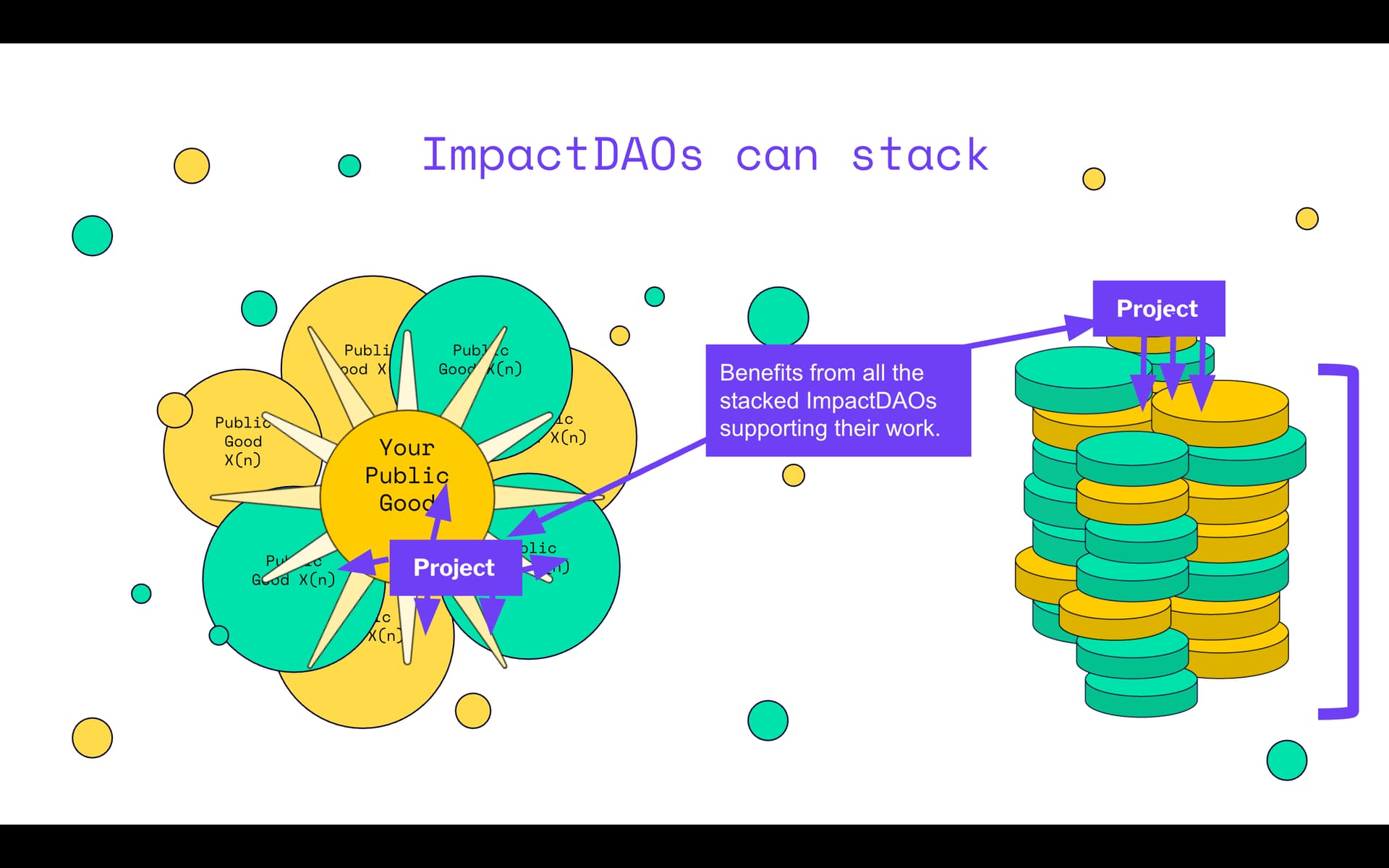
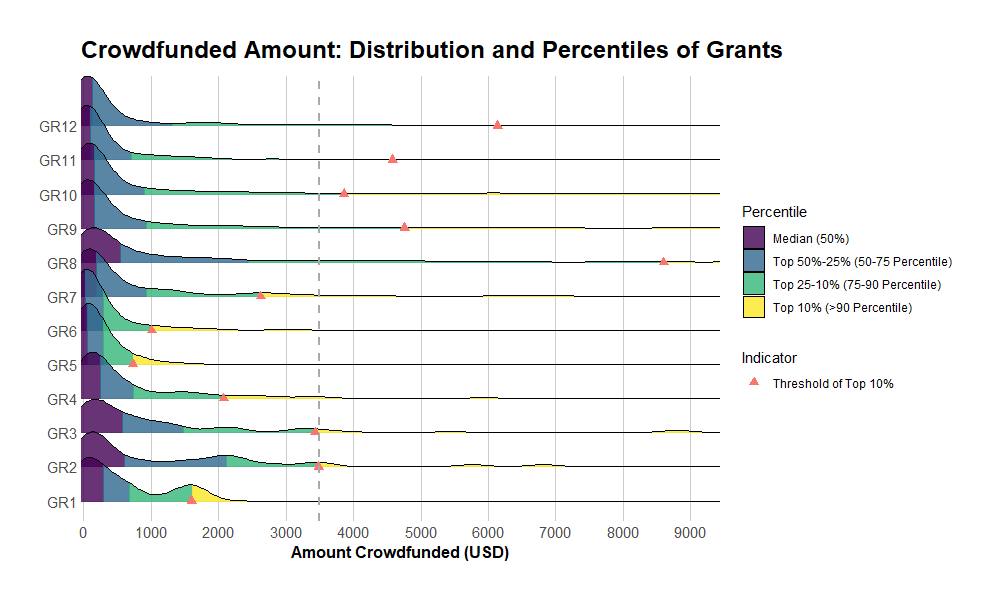
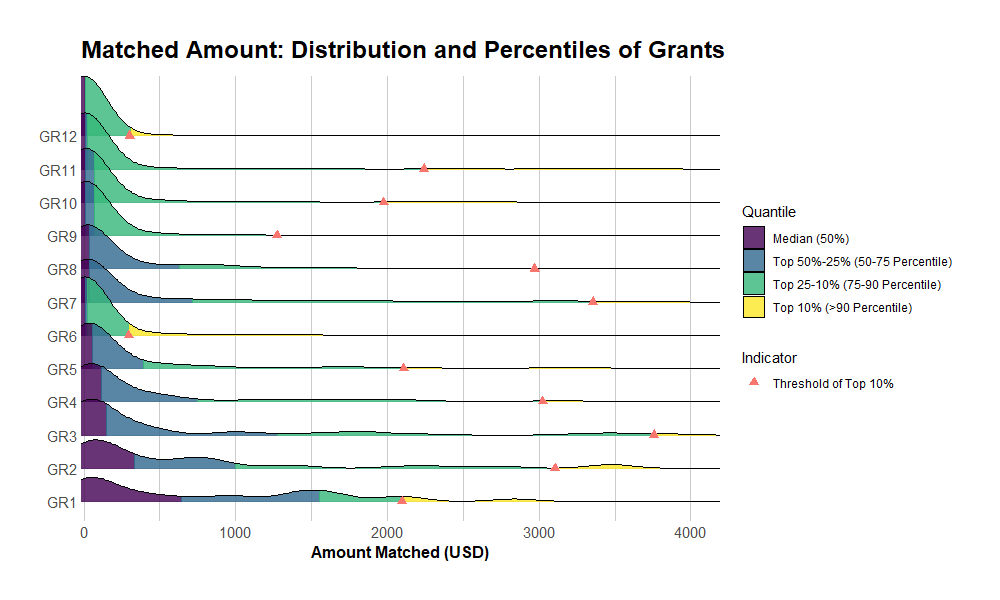
During Gitcoin Grants Round 12, projects appearing in multiple funding rounds experienced substantial matching multiplication effects.
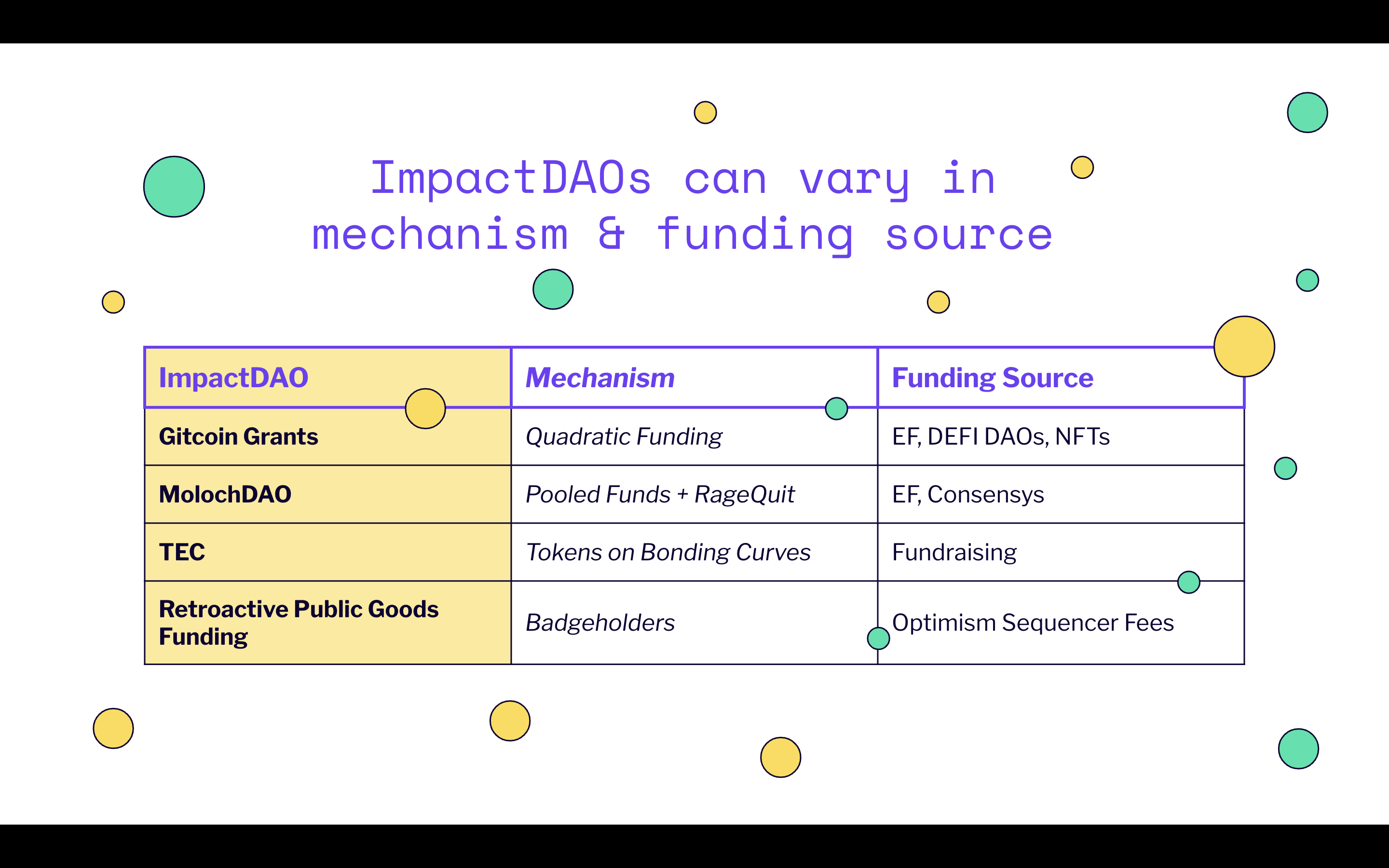
Pluralistic Mechanisms
The vision emphasizes mechanism diversity rather than treating quadratic funding as the sole solution. Two essential ingredients make ImpactDAOs legitimate:
- A funding source
- A mechanism for allocating resources to areas of greatest impact
Public goods funding mechanism diversity is important — no single mechanism solves everything.
The Transition: Nation-States to Niches
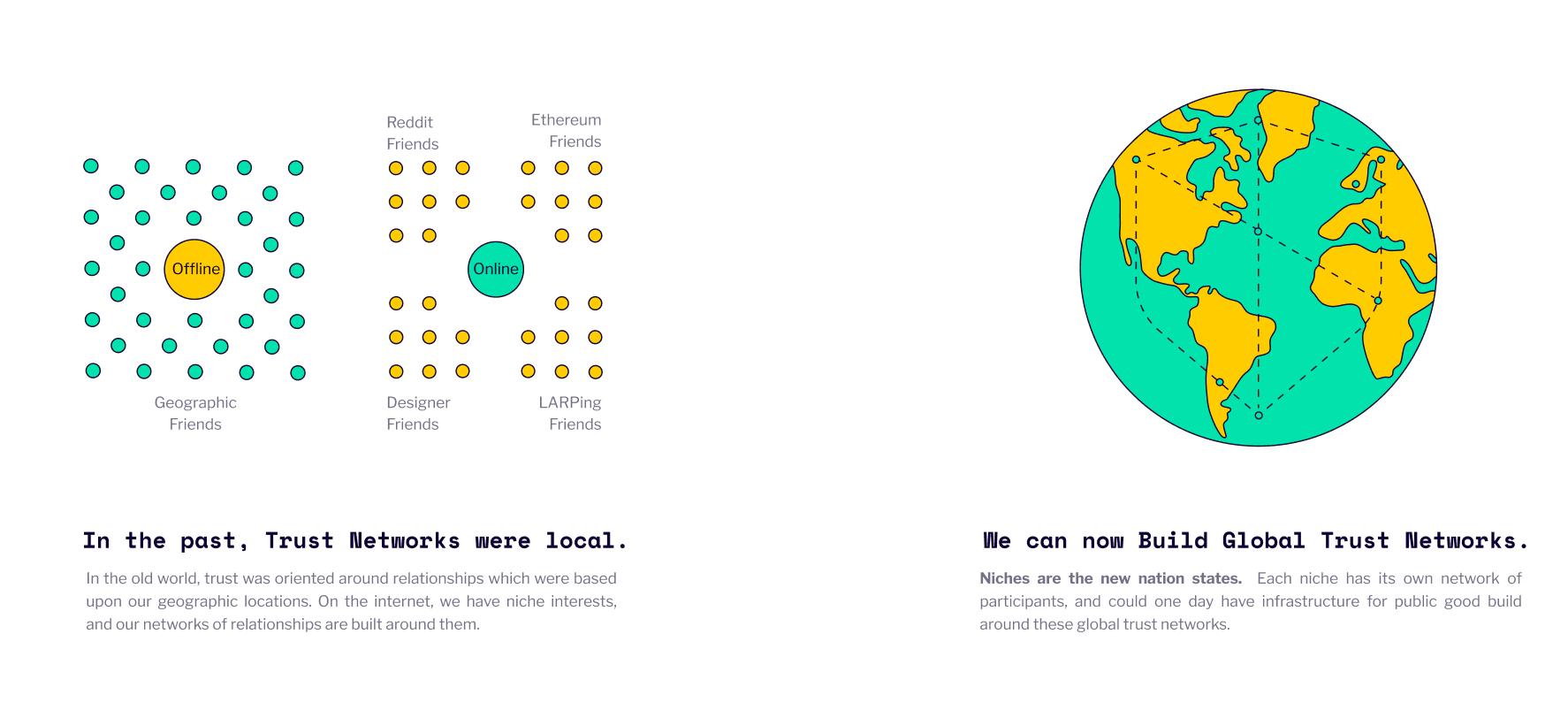
Niches are the new nation-states insofar as public goods funding spreads outward. Trust and coordination that historically flowed through geography now operates through online communities and shared interests.
Gitcoin's Practical Achievements
The organization delivered $50 million in public goods funding through structured grant rounds addressing Ethereum ecosystem public goods, digital advocacy, longevity research, climate initiatives, and ecosystem-specific rounds.
Scaling Architecture
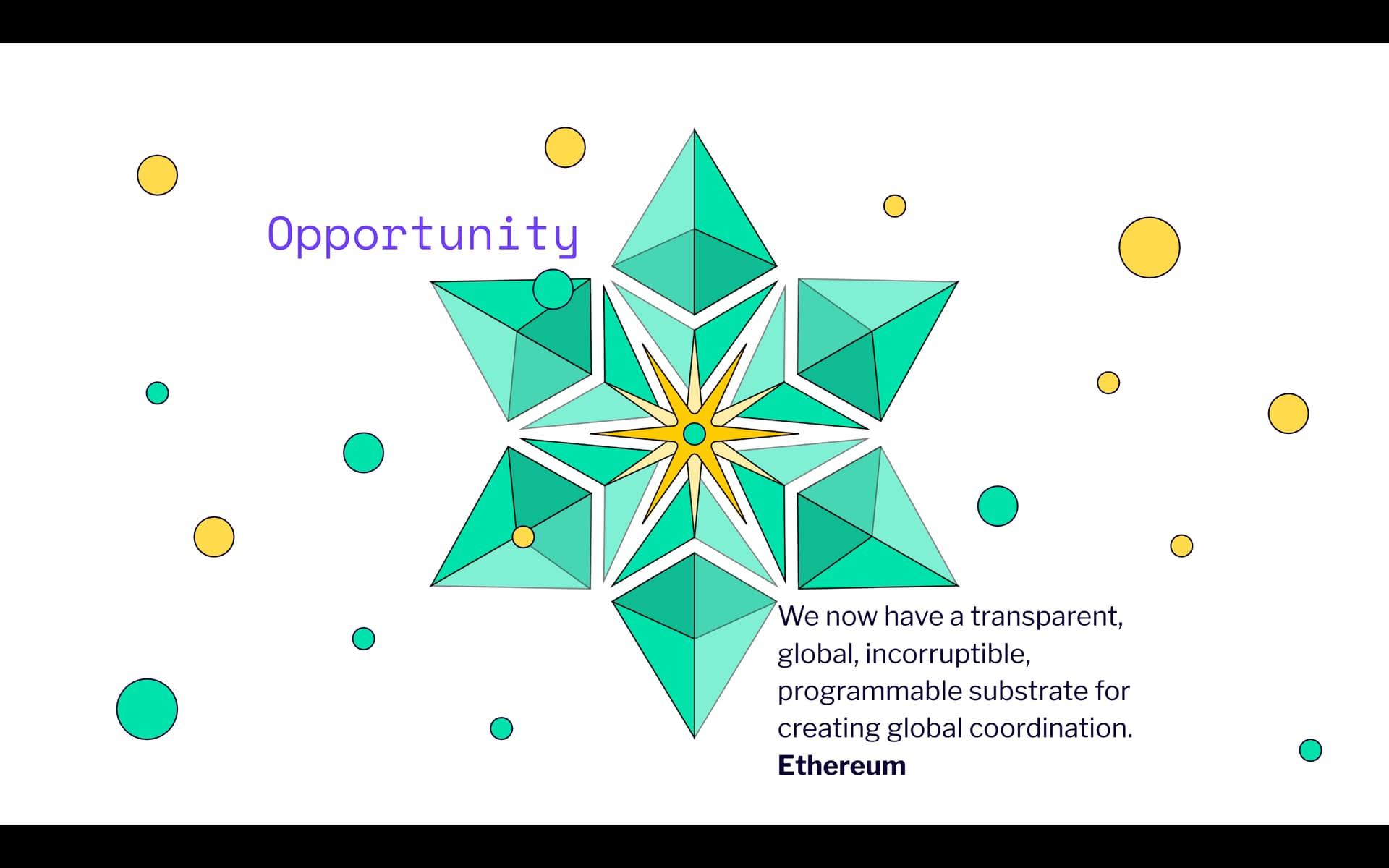
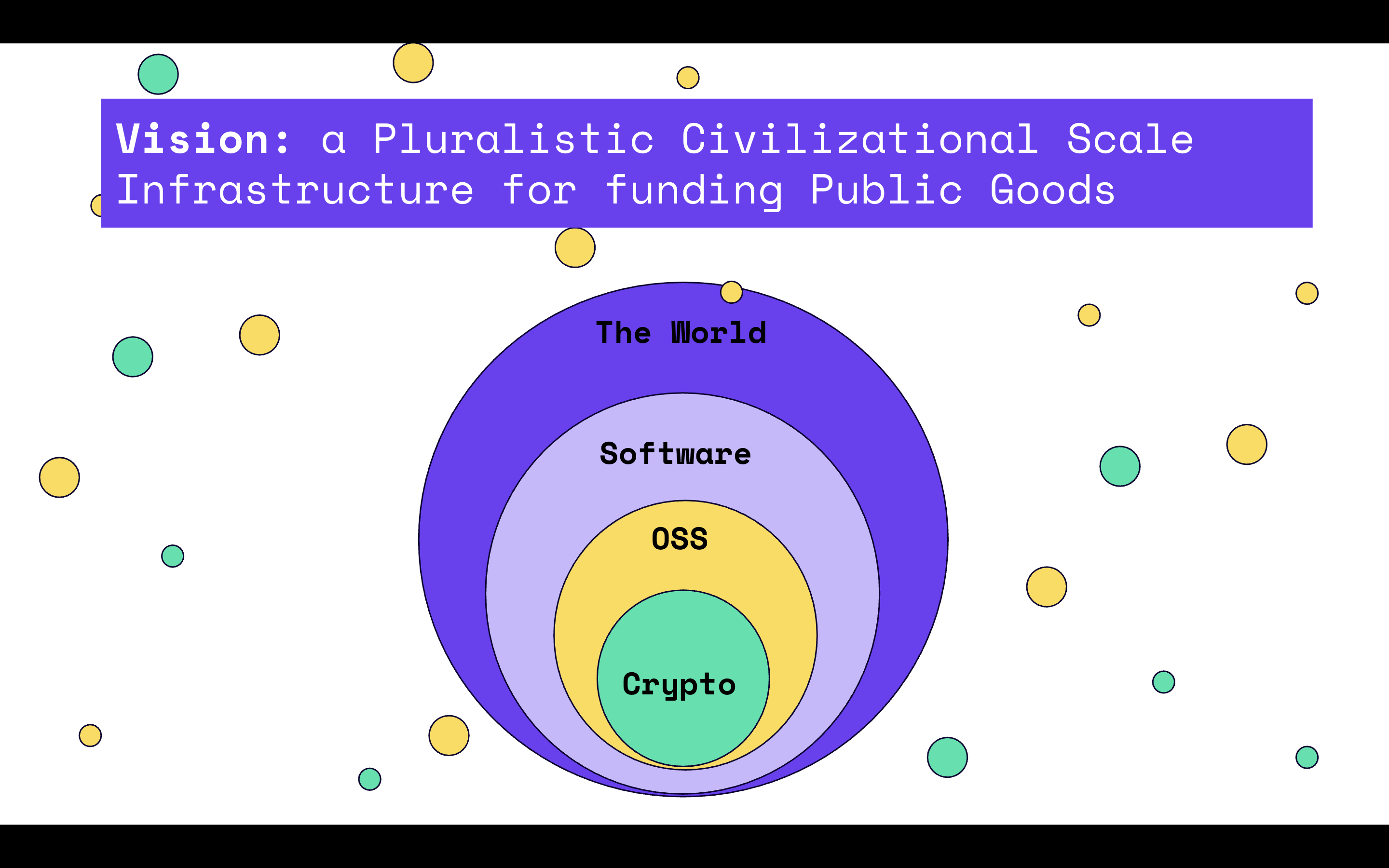
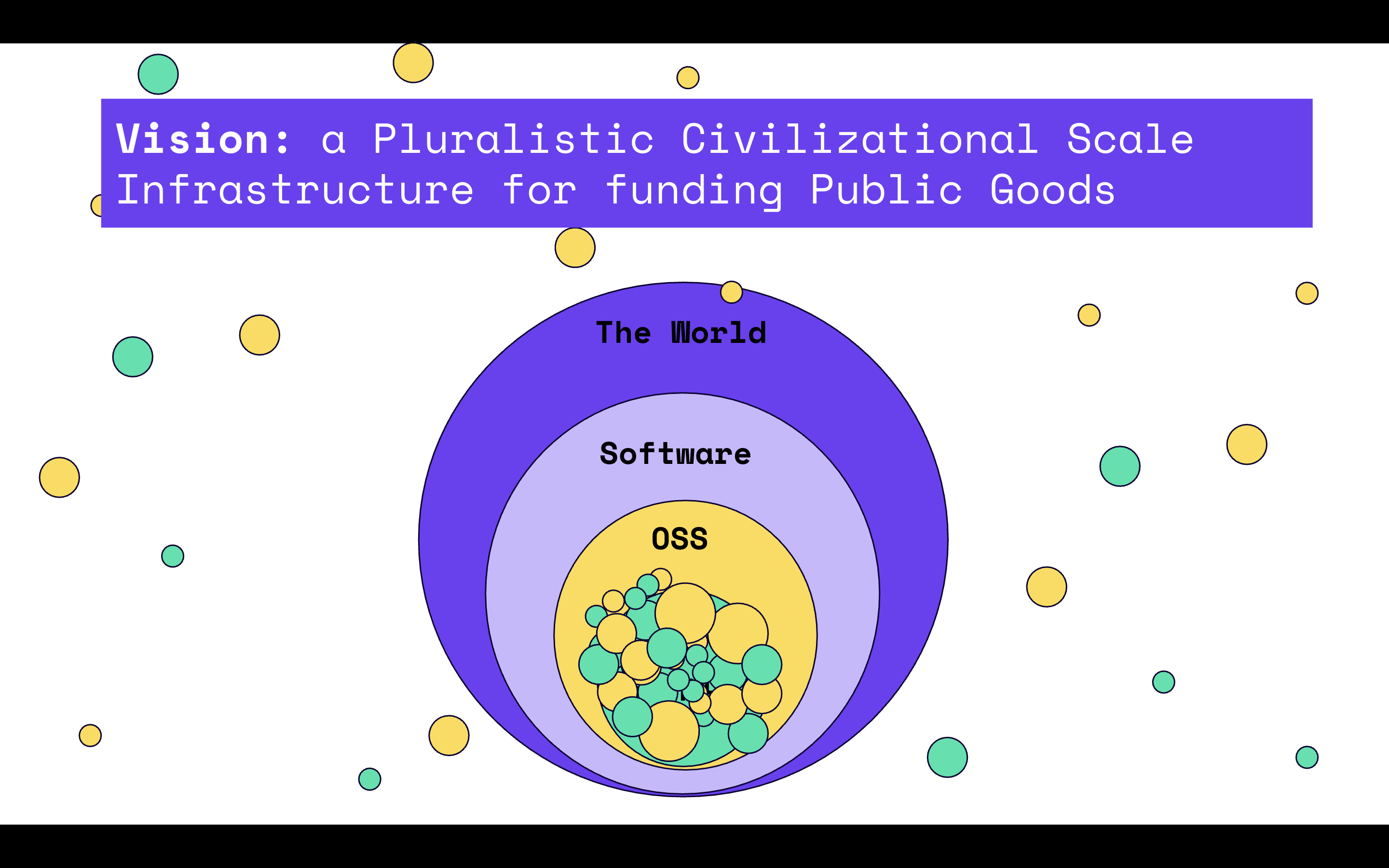
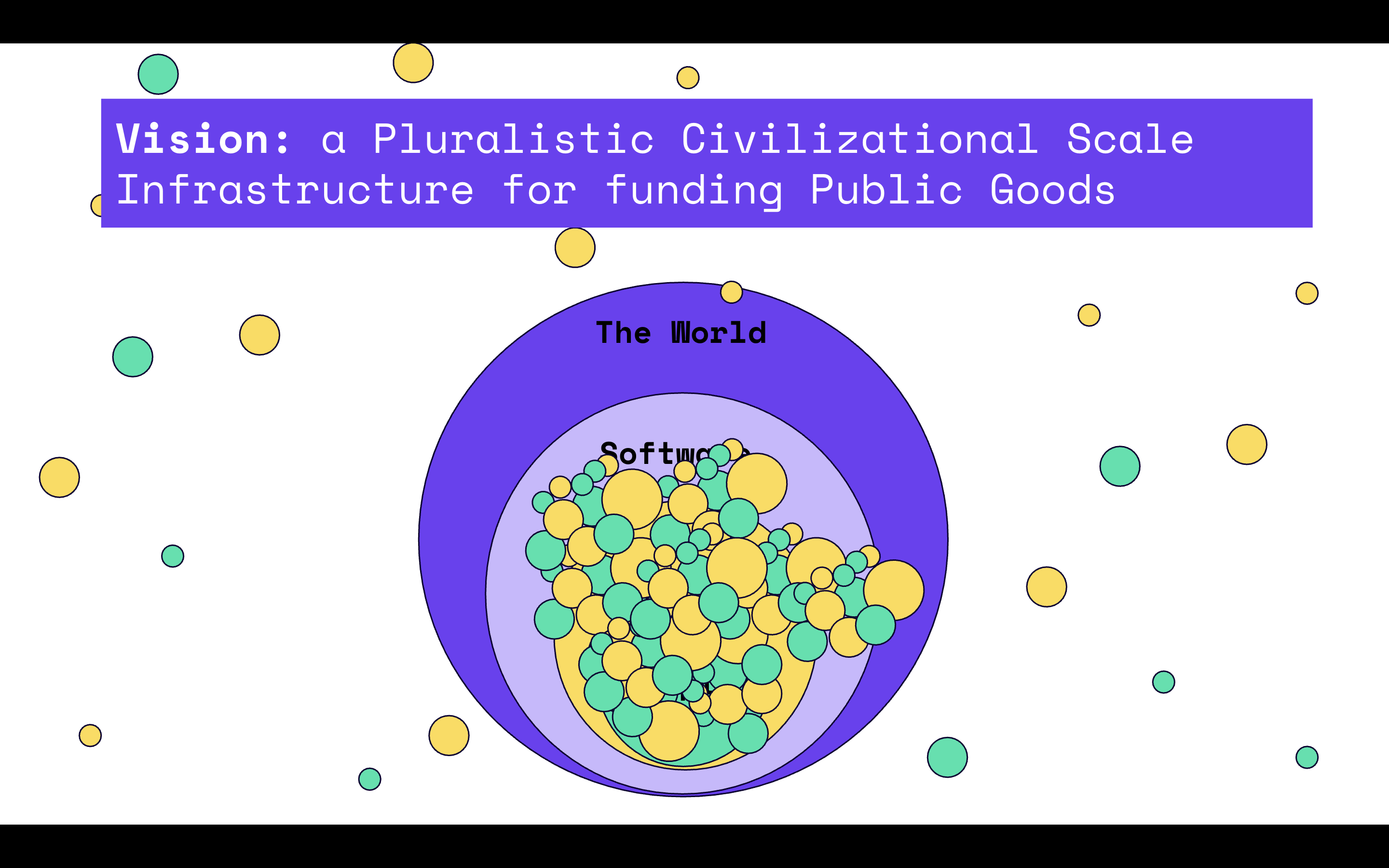
The vision sketches how Ethereum-based public goods could eventually expand beyond the crypto ecosystem to influence traditional open-source software and ultimately address civilization-scale challenges.
Risks and Limitations
- Authority skepticism — avoiding charismatic leader dependency
- Collective valuation — determining how communities prioritize different causes
- Sustainable funding — ensuring adequate capital sources beyond quarterly hustling
- Matthew Effect — preventing wealth concentration and elite capture
- Humility about technology — recognizing that financial systems enable rather than replace local action
- Keynesian beauty contests — acknowledging market dynamics that may not reflect true value
Glen Weyl's Critique
Economist and QF co-author Glen Weyl provided substantial critique, arguing that literal global implementation is mathematically infeasible and contradicts pluralism principles:
- Scale problems: At massive participation levels, matching requirements become astronomically large
- Collusion risks: Existing institutions with coordination capacity would dominate allocations
- Sybil vulnerability: Below critical adoption thresholds, the system becomes exploitable
- Institutional reality: The vision ignores that humans naturally form institutions which then undermine open mechanisms
Weyl proposed instead targeting specific communities where administrators understand social structures well enough to police collusion and fraud. Rather than replacing institutions, Gitcoin should operate as a 3-sided market between donors, sponsors, and projects within a range of institutions to strengthen them rather than replace them.
Key Takeaway
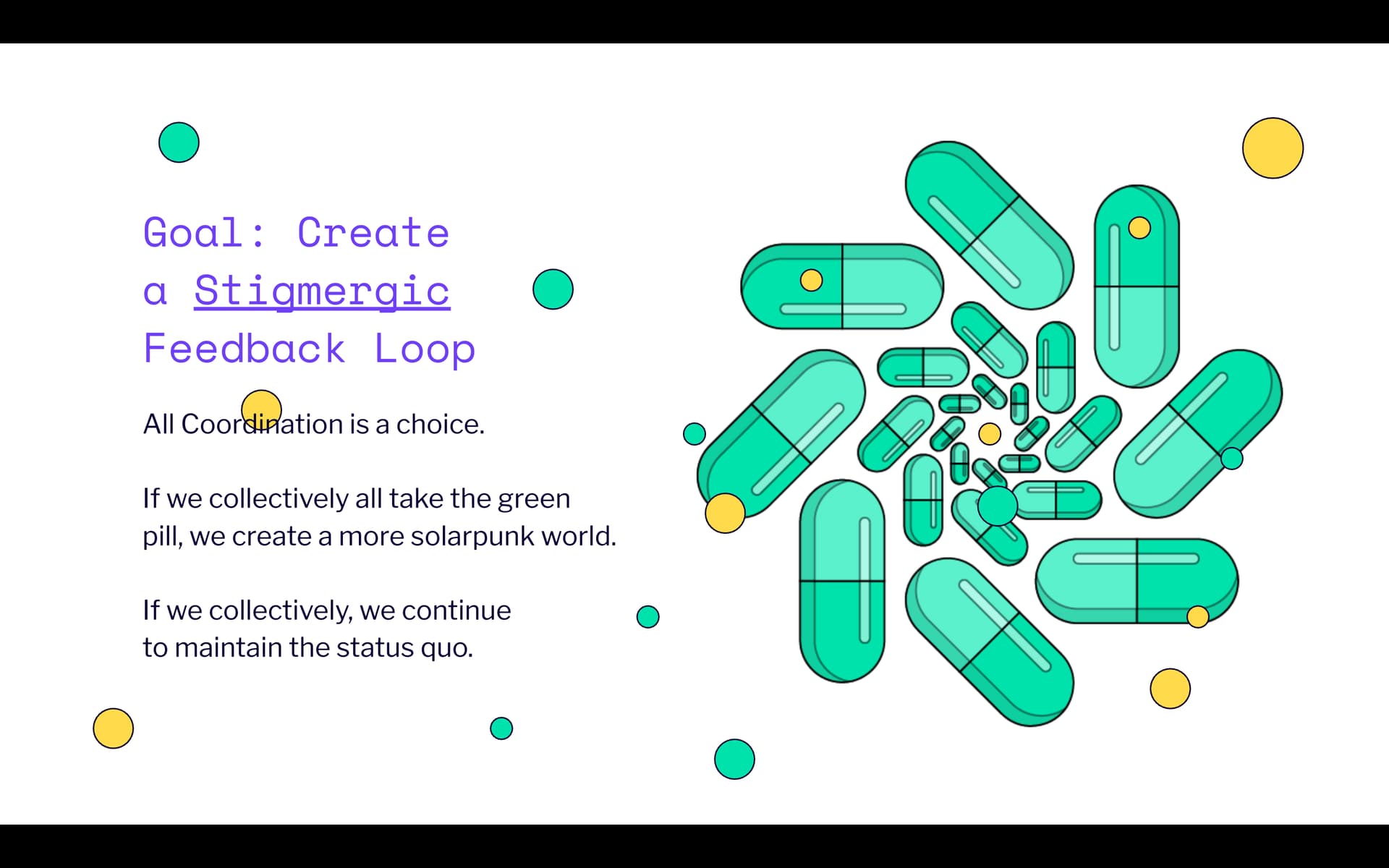
The post articulates an ambitious but contested vision. While ImpactDAOs could eventually address civilizational-scale problems, community-focused applications may prove more realistic and ethically sound. The debate reflects fundamental tensions between decentralization ideology and practical social coordination realities. The goal is creating a stigmergic feedback loop — indirect coordination through environmental modification — that increases the probability of addressing humanity's largest challenges.