TLDR: A DAO of DAOs is an interconnected network where organizations collaborate through shared social, technical, and governance layers — moving beyond zero-sum competition to create ecosystems where DAOs collectively thrive through mutual support and interoperability.
Originally published: X Article — January 14, 2025
TLDR
A DAO of DAOs is an interconnected network where organizations collaborate through three progressively deeper layers:
- Social: Building trust through shared events, speaking engagements, and community interaction
- Technical: Creating interoperable products and shared infrastructure (e.g., identity verification, joint platforms)
- Governance: Sharing decision-making power through mutual grants and governance rights
Instead of competing like Web2 companies, these DAOs form an ecosystem where they support each other and collectively succeed or fail together, maximizing their shared impact through collaboration rather than competition.
DAO of DAOs
The future of decentralized organizations lies not in isolation, but in the emergence of deeply interconnected networks of DAOs that support and strengthen each other through multiple layers of collaboration. This "DAO of DAOs" concept represents a fundamental shift from the competitive dynamics of Web2 to a new paradigm of practical pluralism, where organizations thrive through mutual support and interoperability.
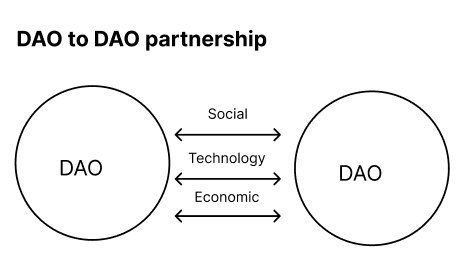
1. Social Layer Interop
At its foundation, these interconnected DAOs begin with social interoperability, the essential building block of trust and collaboration. This manifests through cross-pollination of ideas and community engagement, where members from different DAOs participate in each other's events, share knowledge, and build genuine relationships. For instance, DAOs might invite each other's members to speak at conferences, join Twitter spaces, or participate in community calls. These social connections create the human infrastructure necessary for deeper collaboration.
2. Technology Layer Interop
The second layer, technological interoperability, transforms theoretical alignment into practical cooperation. Here, DAOs invest resources into building compatible systems and shared infrastructure. This might involve one DAO incorporating another's verification protocol, launching joint media initiatives, or creating integrated user experiences. The focus shifts from isolated development to creating an ecosystem where different protocols and platforms work seamlessly together, multiplying their individual effectiveness through combination.
3. Economic/Governance Layer Interop
The deepest level of integration occurs through governance rights interoperability, where DAOs begin sharing decision-making power and resources. This often takes the form of mutual grants committees, shared incubation programs, or reciprocal governance rights. For example, when one DAO allocates governance tokens to another or creates joint decision-making processes, they create formal mechanisms for shared destiny. This level of integration ensures that success or failure affects all participants, encouraging thoughtful collaboration and mutual support.
1 + 2 + 3 = Full Stack Alignment
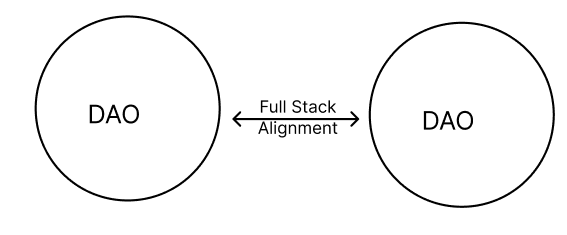
The power of this three-layered integration becomes evident in DAOs that are integrated on all three levels.
Practical Examples
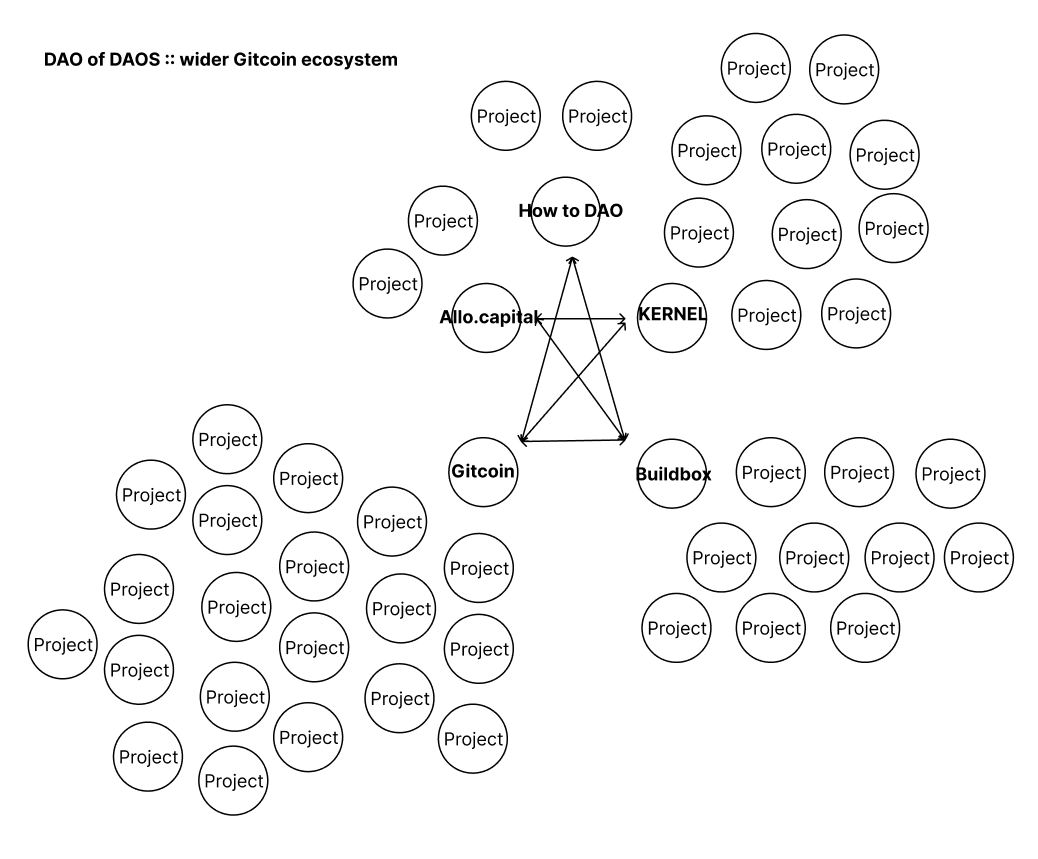
Consider how Gitcoin DAO has partnered with multiple organizations: they might begin by featuring partners at their Schelling Point conference (social layer), then integrate partners' identity verification or capital allocation mechanisms into Gitcoin Grants (technological layer), and finally establish mutual grant programs that give each DAO a stake in the other's governance (governance rights layer). Each layer builds upon the previous one, creating increasingly robust bonds between organizations.
In addition to Gitcoin itself, Gitcoin's sister DAOs (Buildbox, our hackathon ecosystem; KERNEL, a web3 learning ecosystem; Allo.capital; and HOW TO DAO) each have their own way of engaging in DAO to DAO partnerships, accelerating the projects around them in different (but still systematic) ways.
Other Examples of DAO of DAOs
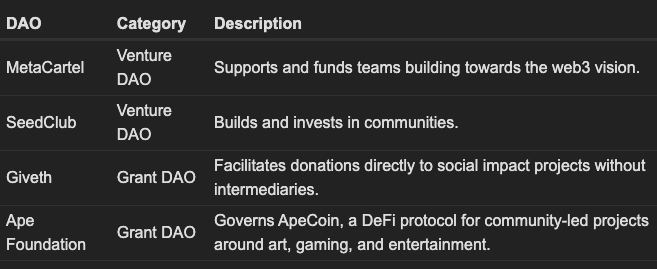
The DAO of DAOs represents a dramatic departure from traditional organizational relationships. Instead of competing for market share, these DAOs create value through complementary services and shared resources. The result is an ecosystem that becomes stronger through diversity, where each DAO contributes its unique strengths while benefiting from the capabilities of others. This practical pluralism allows for specialized focus while maintaining system-wide resilience.
Looking forward, this approach could transform how we think about organizational success. This model of layered interoperability - social, technological, and governance - provides a framework for building these relationships intentionally and systematically. Rather than measuring individual growth, we might evaluate the health of entire DAO ecosystems. Success would be measured not just in individual metrics, but in the strength of interconnections and the collective achievement of shared missions. This could lead to more sustainable and resilient organizational structures that are better equipped to tackle complex challenges.
Zooming Out
The ultimate articulation of this is a regen web3 ecosystem functioning as a grand DAO of DAOs, where a diverse array of protocols and organizations work in concert to create value greater than the sum of their parts. This wouldn't eliminate healthy competition but would reframe it within a context of mutual support and shared success. As these networks mature, they could demonstrate how decentralized organizations can achieve remarkable outcomes through cooperation rather than competition.
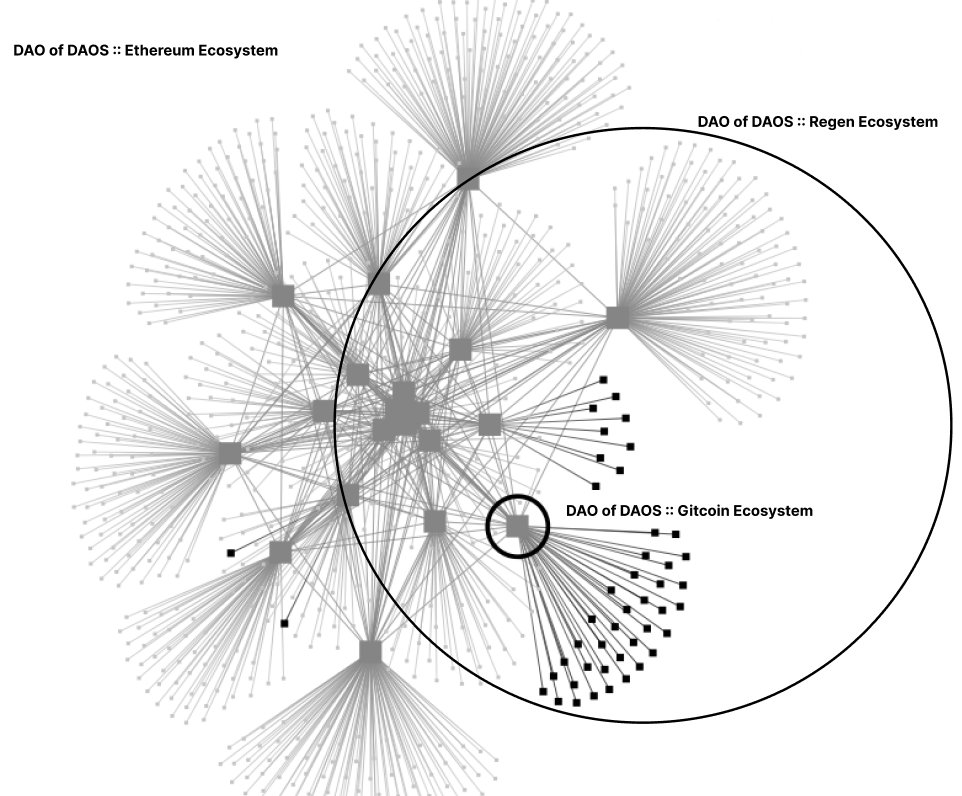
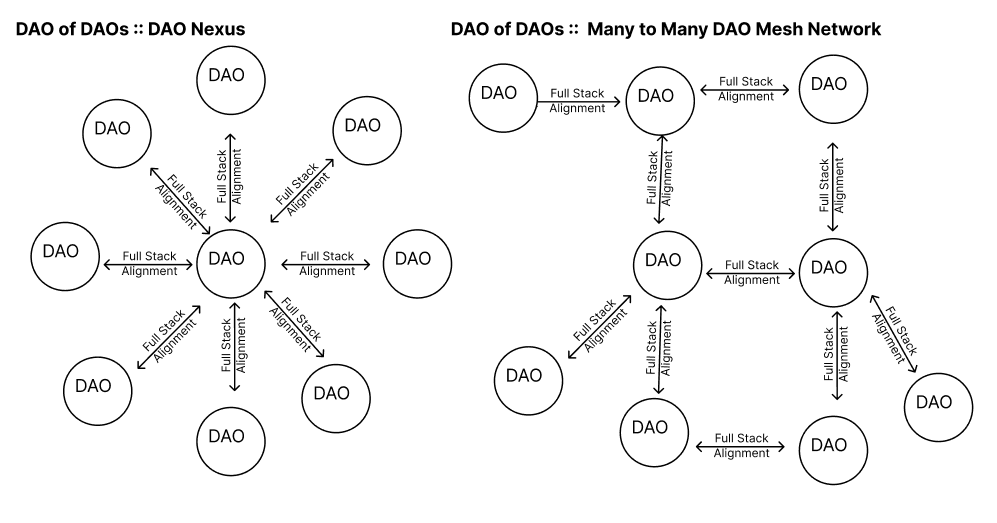
As more practical examples come online, it will be interesting to see what shapes they form.
Will they look like a DAO nexus (e.g. a hyperconnector DAO connects everyone around them)? Or will DAO of DAOs be a loose network without any one DAO becoming the primary instigator for the alignment?
Challenges of DAO of DAOs
While the potential of DAO of DAOs is significant, there are also challenges that need to be addressed:
- Governance Complexity: Managing a network of interconnected DAOs can be complex, requiring sophisticated governance mechanisms and coordination protocols. Designing effective governance frameworks that balance the autonomy of individual DAOs with the need for overall network cohesion is crucial.
- Potential for Conflict: Disagreements and conflicts may arise between different DAOs within the network, requiring effective dispute resolution mechanisms. These conflicts could stem from differences in goals, values, or resource allocation.
- Security Risks: A DAO of DAOs may be more vulnerable to security breaches if one or more of the constituent DAOs are compromised. A security breach in one DAO could potentially have cascading effects on the entire network.
- Legal Uncertainty: The legal status of DAO of DAOs is still unclear in many jurisdictions, which could create challenges for compliance and regulation.
- Decision-Making Time: Reaching consensus and making decisions in a DAO of DAOs can be time-consuming due to the need to coordinate multiple DAOs.
Benefits of DAO of DAOs
Despite the challenges, the potential benefits of DAO of DAOs are compelling:
- Increased Collaboration: DAO of DAOs foster collaboration and synergy among different DAOs, allowing them to leverage each other's strengths and expertise. This can lead to more innovative solutions, faster development cycles, and increased efficiency.
- Resource Sharing: By sharing resources such as funding, talent, and technology, DAOs can optimize their operations and reduce costs. This can be particularly beneficial for smaller DAOs that may not have the resources to operate independently.
- Reduced Operational Costs: By outsourcing functions that are not within one DAO's core competency to another, DAOs are better able to focus on their own missions and products.
- Enhanced Resilience: A network of interconnected DAOs is more resilient to external threats and shocks than a single, isolated DAO. If one DAO fails, the others can support it or take over its functions.
- Stronger Community: DAO of DAOs can create a stronger sense of community and shared purpose among members of different DAOs.
- Larger Social Movements: DAO of DAOs can lead to more effective building of social movements by allowing for cross-DAO integration.
The DAO of DAOs
DAO of DAOs represent a significant evolution in the world of decentralized governance. By fostering collaboration, resource sharing, and resilience, these networks have the potential to unlock new levels of innovation and impact. While challenges remain in terms of governance complexity, potential for conflict, and security risks, the benefits of increased collaboration, resource sharing, and community building are compelling. As the DAO landscape continues to mature, we can expect to see more sophisticated and impactful DAO of DAOs emerge, driving the adoption of decentralized governance across various industries and sectors. The future of DAOs lies in their ability to connect, collaborate, and collectively shape a more decentralized and participatory future.
The DAO of DAOs reminds us that true decentralization isn't about standing alone, but about creating strong, flexible connections that allow independent organizations to rise and fall together, creating a more robust + successful future for each.
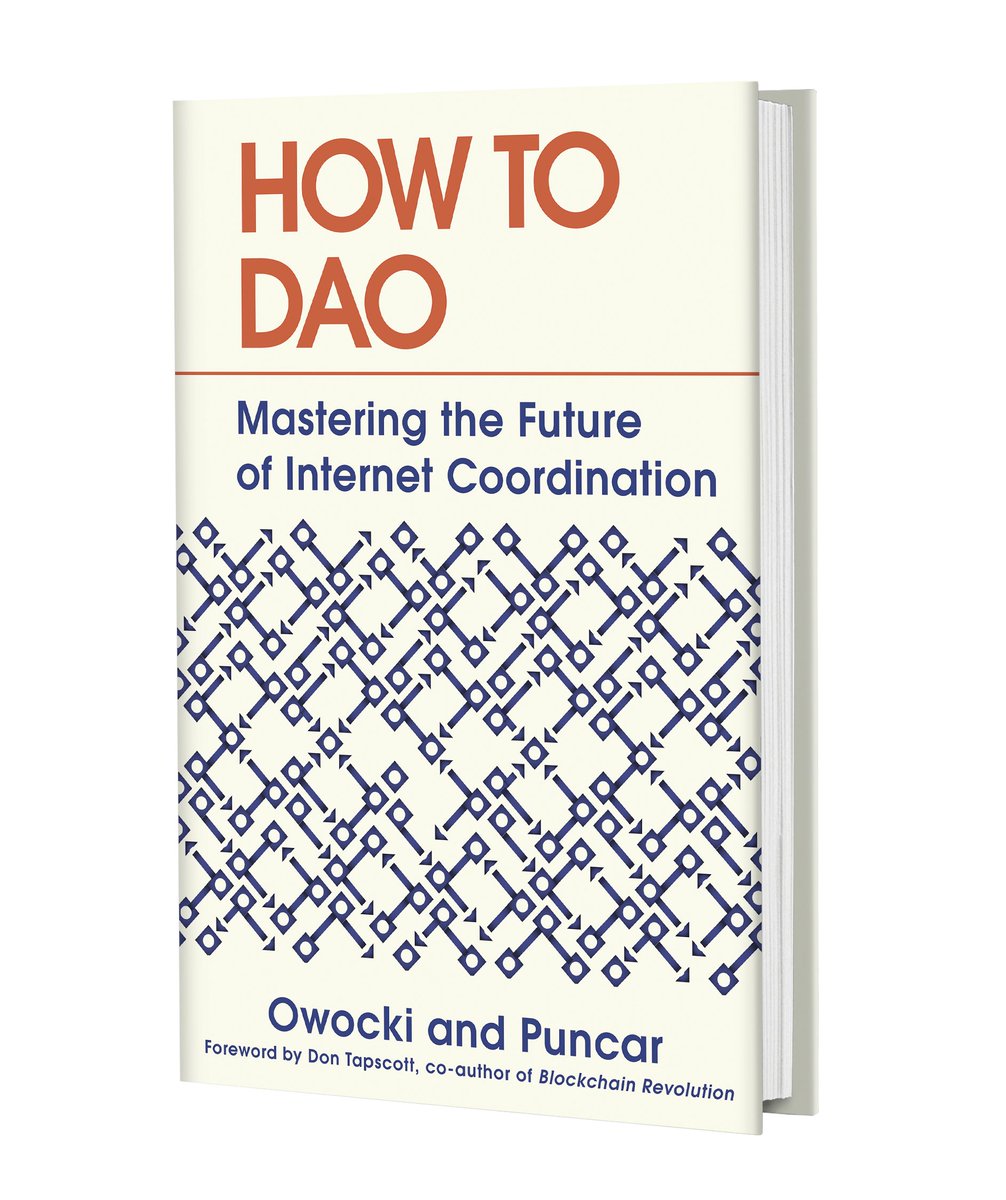
HOW TO DAO - The Book About DAOs
If you enjoyed this article about the DAO ecosystem, consider picking up a copy of HOW TO DAO - this book was released by @owocki, @puncarH2D and @penguinbooks. We are excited to usher in more understanding of how to operate in a DAO-native world to the next generation. Pick up a copy at howtodao.xyz.